Showing posts with label primitive. Show all posts

Friday, 3 July 2026

28215: An Interesting Number

I've heard it said that all numbers are interesting and that, if a number is not, then it's interesting because it's not. The number associated with my diurnal age today (\( \textbf{28215}\) ) is definitely interesting. 

FIRST INTERESTING PROPERTY

Its prime factorisation is as follows:$$28215=3^3 \times 5 \times 11 \times 19$$It has 32 proper divisors and these are:

1, 3, 5, 9, 11, 15, 19, 27, 33, 45, 55, 57, 95, 99, 135, 165, 171, 209, 285, 297, 495, 513, 627, 855, 1045, 1485, 1881, 2565, 3135, 5643, 9405

The sum of these divisors is 29385 and so the number is abundant because this sum exceeds the number itself. Furthermore, all of these divisors are deficient and this makes it primitive abundant. Lastly the number is odd. This makes 28215 an odd primitive abundant number and these sorts of numbers are quite rare. Here is the list of the 50 such numbers up to 40000 (permalink):

945, 1575, 2205, 3465, 4095, 5355, 5775, 5985, 6435, 6825, 7245, 7425, 8085, 8415, 8925, 9135, 9555, 9765, 11655, 12705, 12915, 13545, 14805, 15015, 16695, 18585, 19215, 19635, 21105, 21945, 22365, 22995, 23205, 24885, 25935, 26145, 26565, 28035, \( \textbf{28215}\), 29835, 30555, 31395, 31815, 32445, 33345, 33495, 33915, 34155, 35805, 39585

SECOND INTERESTING PROPERTY


It can be seen from its factorisation that 28215 is 6-almost prime and its reversal, 51282, is also 6-almost prime:$$ \begin{align} 28215 &=3^3 \times 5 \times 11 \times 19 \\ 51282 &= 2 \times 3^2 \times 7 \times 11 \times 37 \end{align}$$While this property is not quite are rare as being odd primitive abundant, there are still only 118 such numbers in the range up to 40000. These are (permalink):

2576, 2772, 2970, 2992, 4284, 4356, 4410, 4600, 4698, 4824, 5265, 5625, 6534, 6752, 6776, 6900, 8008, 8250, 8964, 10710, 10890, 13140, 13986, 16236, 16335, 17577, 18504, 19494, 20286, 20574, 21112, 21114, 21150, 21160, 21336, 21492, 21576, 21609, 21712, 21900, 21912, 21996, 22392, 22770, 22788, 22824, 22869, 23058, 23247, 23250, 23496, 23562, 23580, 23598, 23632, 23832, 24156, 24660, 24975, 25020, 25092, 25104, 25164, 25245, 25300, 25416, 25434, 25452, 25608, 25668, 25752, 25952, 26163, 26334, 26532, 27060, 27108, 27135, 27192, 27240, 27248, 27270, 27405, 27408, 27468, 27472, 27588, 27608, 27636, 27816, 28116, \( \textbf{28215} \), 28314, 28710, 28782, 28890, 29052, 29172, 29322, 29340, 29392, 29412, 29580, 29750, 29784, 29835, 29900, 29960, 29984, 32967, 34965, 35775, 35937, 36162, 36990, 37026, 38367, 38934

I explore this reversibility extensively in my post titled Beyond Emirp from July 2025.

THIRD INTERESTING PROPERTY


The totient of a number \(n\) (commonly known as Euler's totient function or phi function, denoted as \(\phi(n)\)) counts the number of positive integers up to \(n\) that share no common factors with \(n\) other than 1. These numbers are called "relatively prime" or "coprime" to \(n\).

28215 has the property that it and its reversal, 51282, both have the same totient. Thus:$$ \phi(28215)=\phi(51282)=12960 $$This property is the rarest of all because in the range up to 40000 there are only 25 numbers with this property. They are:

190, 427, 429, 724, 924, 4147, 4697, 6276, 6726, 7414, 7964, 9079, 9709, 10040, 10940, 14450, 15860, 19190, 20493, 20553, 28092, \( \textbf{28215}\), 29082, 35502, 39402

FOURTH INTERESTING PROPERTY


28215 is a member of OEIS  A076773:


A076773   2-nadirs of \( \phi\) : numbers \( k \text{ such that }\)  
\( \phi(k-2) \gt \phi(k-1) \gt \phi(k) \lt \phi(k+1) \lt \phi(k+2) \)


I covered this in a post titled Totient Function: Jagged Versus Rounded Local Minima back in March of 2025. Figure 1 gives an idea of what is going on:

Figure 1

Here the \(\phi\) values for 28213, 28214, 26215, 28216, 28217 are:$$27808 \lt14106 \lt 12960 \lt14104 \lt23184$$There are 238 such minima in the range up to 40000:

315, 525, 735, 1155, 1365, 1575, 1755, 1785, 1815, 1995, 2145, 2415, 2475, 2805, 3045, 3315, 3465, 3885, 4095, 4125, 4305, 4515, 4725, 4935, 5115, 5145, 5355, 5775, 6045, 6195, 6405, 6435, 6615, 6825, 7035, 7095, 7245, 7395, 7455, 7605, 7665, 8085, 8265, 8505, 8715, 8745, 8925, 9135, 9345, 9405, 9555, 9735, 9765, 9975, 10185, 10395, 10455, 10545, 10815, 10965, 11055, 11235, 11385, 11445, 11655, 11865, 12075, 12285, 12495, 12675, 12705, 12915, 13125, 13335, 13545, 13695, 13965, 14025, 14175, 14355, 14385, 14595, 14805, 14835, 15015, 15045, 15225, 15405, 15435, 15645, 15675, 15855, 16005, 16065, 16275, 16335, 16485, 16695, 16905, 17085, 17325, 17355, 17745, 17955, 18135, 18165, 18375, 18585, 18645, 18795, 18975, 19215, 19425, 19635, 19665, 20055, 20265, 20295, 20475, 20625, 20685, 20865, 20895, 21105, 21255, 21315, 21525, 21945, 22365, 22425, 22575, 22605, 22785, 22995, 23205, 23265, 23415, 23595, 23625, 23655, 23835, 23985, 24225, 24255, 24675, 24885, 24915, 25095, 25245, 25305, 25515, 25575, 25725, 25905, 25935, 26145, 26325, 26565, 26775, 26985, 27027, 27195, 27615, 27825, 27885, 28035, \( \textbf{28215}\), 28245, 28275, 28455, 28665, 28815, 28875, 29055, 29295, 29505, 29865, 29925, 30195, 30345, 30555, 30723, 30765, 30975, 31185, 31365, 31395, 31605, 31815, 32025, 32175, 32235, 32445, 32655, 32835, 32895, 33033, 33075, 33345, 33495, 33705, 33735, 33915, 34125, 34155, 34335, 34485, 34515, 34545, 34755, 34965, 35175, 35385, 35805, 36225, 36435, 36465, 36645, 36795, 36855, 37065, 37275, 37455, 37485, 37695, 37905, 38115, 38535, 38745, 38775, 38955, 39165, 39195, 39375, 39435, 39585, 39765, 39795

FIFTH INTERESTING PROPERTY


28215 is also a member of A323380:


A323380  2-zeniths of \(\sigma\): numbers \( k \text{ such that }\)
                    \( \sigma(k-2) \lt \sigma(k-1) \lt \sigma(k) \gt \sigma(k+1) \gt \sigma(k+2) \)


I covered this in a post titled Totient and Sigma Graphs Revisited in August of 2025. Figure 2 shows what's going on and it's the local zenith replacing the local nadir of the totient graph:


Figure 2

Here the sigma values for 28213, 28214, 26215, 28216, 28217 are:$$28620 \lt 42324 \lt 57600 \gt52920 \gt 33600$$Below is a list of numbers up to 40000 that belong to BOTH OEIS A323380 and OEIS A076773 (sigma and totient respectively):

315, 525, 1155, 1575, 1755, 1785, 1995, 2475, 2805, 3045, 3315, 3465, 3885, 4095, 4125, 4515, 4725, 5115, 5355, 5775, 6045, 6195, 6405, 6435, 6615, 6825, 7035, 7245, 7605, 8085, 8505, 8715, 8925, 9135, 9405, 9555, 9765, 9975, 10395, 11235, 11385, 11445, 11655, 12075, 12285, 12675, 12705, 12915, 13125, 13545, 13965, 14025, 14175, 14355, 14595, 14805, 15015, 15435, 15645, 15675, 16005, 16065, 16275, 16335, 16695, 16905, 17325, 17745, 17955, 18135, 18375, 18585, 18795, 19215, 19635, 20475, 20685, 21105, 21315, 21525, 21945, 22365, 22605, 22995, 23205, 23595, 23625, 23835, 24255, 24675, 24885, 24915, 25245, 25515, 25725, 25935, 26325, 26565, 26775, 27027, 27195, 27885, 28035, \( \textbf{28215}\), 28245, 28275, 28665, 28875, 29295, 29925, 30195, 30345, 30555, 30723, 30765, 31185, 31365, 31395, 31605, 31815, 32025, 32175, 32235, 32445, 32835, 33075, 33345, 33495, 33915, 34125, 34155, 34485, 34515, 34755, 34965, 35175, 35805, 36225, 36435, 36645, 36795, 36855, 37275, 37485, 38115, 38745, 38955, 39165, 39195, 39375, 39435, 39585, 39765, 39795

SIXTH INTERESTING PROPERTY


28215 has a totient and sum of divisors that have 2, 3 and 5 as their distinct prime factors:$$ \begin{align} \sigma(28215) &= 57600 = 2^8 \times 3^2 \times 5^2 \rightarrow 2, 3, 5 \text{ as distinct prime factors} \\ \phi(28215) &= 12960 = 2^5 \times 3^4 \times 5 \rightarrow 2, 3, 5 \text{ as distinct prime factors} \end{align} $$There are 143 such numbers in the range from 28215 to 40000:

\( \textbf{28215} \), 28258, 28329, 28340, 28424, 28458, 28614, 28728, 28768, 28782, 28809, 28826, 28985, 29029, 29222, 29260, 29295, 29337, 29393, 29512, 29640, 29667, 29678, 29835, 29848, 30039, 30184, 30240, 30264, 30305, 30381, 30504, 30566, 30760, 30780, 30814, 30888, 30914, 30943, 30956, 30996, 31008, 31027, 31160, 31174, 31283, 31331, 31392, 31416, 31465, 31496, 31529, 31806, 31816, 32103, 32130, 32131, 32298, 32376, 32395, 32589, 32604, 32718, 32802, 32984, 33015, 33176, 33292, 33345, 33383, 33440, 33480, 33495, 33497, 33528, 33572, 33592, 33836, 33885, 33915, 34008, 34162, 34276, 34293, 34317, 34440, 34452, 34573, 34580, 34605, 34782, 34884, 35061, 35074, 35112, 35340, 35343, 35424, 35464, 35530, 35752, 35805, 35910, 35948, 35960, 36366, 36423, 36666, 36828, 36859, 36860, 36890, 36920, 37060, 37128, 37417, 37638, 37719, 37730, 37758, 37772, 37961, 38038, 38152, 38285, 38340, 38368, 38408, 38610, 38745, 38760, 38874, 39032, 39121, 39219, 39270, 39370, 39458, 39501, 39520, 39556, 39576, 39729

SEVENTH INTERESTING PROPERTY


28215 is what I've termed an \(a,b,c,d\) number because it can be combined with three other numbers, all with the same digits, to form a simple additive equation and this can be done in two different ways. Here is what I mean:$$ \begin{align} 25182 + 28125 + \textbf{28215} &= 81522 \\ 25812 + 28125 + \textbf{28215} &= 82152 \end{align}$$Here are the numbers with this property in the range from 28215 to 40000:

\( \textbf{28215}\), 28260, 28269, 28359, 28413, 28458, 28467, 28476, 28512, 28521, 28539, 28548, 28593, 28611, 28647, 28674, 28692, 28701, 28710, 28719, 28746, 28764, 28791, 28845, 28854, 28863, 28917, 28935, 28953, 28962, 28971, 29016, 29034, 29043, 29061, 29106, 29160, 29178, 29187, 29268, 29304, 29340, 29358, 29367, 29385, 29394, 29439, 29448, 29475, 29493, 29538, 29583, 29601, 29610, 29628, 29637, 29673, 29682, 29718, 29754, 29763, 29781, 29817, 29835, 29853, 29871, 29961, 30015, 30150, 30159, 30168, 30195, 30285, 30294, 30429, 30492, 30519, 30582, 30591, 30627, 30681, 30726, 30825, 30852, 30924, 30942, 30951, 31059, 31068, 31149, 31158, 31176, 31185, 31464, 31491, 31509, 31590, 31599, 31608, 31635, 31644, 31653, 31680, 31689, 31698, 31761, 31788, 31806, 31815, 31842, 31860, 31869, 31878, 31896, 31905, 31959, 31968, 31986, 31995, 32049, 32076, 32085, 32148, 32418, 32481, 32490, 32499, 32580, 32607, 32679, 32697, 32760, 32769, 32796, 32814, 32841, 32850, 32859, 32886, 32895, 32904, 32958, 32967, 32976, 32985, 32994, 34029, 34119, 34128, 34164, 34182, 34218, 34281, 34299, 34461, 34614, 34641, 34812, 34821, 34911, 34992, 35019, 35082, 35091, 35109, 35118, 35190, 35217, 35271, 35631, 35712, 35721, 35802, 35820, 35829, 35892, 35910, 35982, 35991, 36018, 36108, 36117, 36135, 36144, 36153, 36171, 36198, 36261, 36279, 36288, 36297, 36315, 36351, 36414, 36513, 36531, 36621, 36711, 36729, 36792, 36810, 36819, 36918, 36927, 36972, 36981, 37116, 37125, 37161, 37179, 37197, 37215, 37251, 37269, 37296, 37521, 37611, 37629, 37719, 37917, 37962, 38016, 38061, 38106, 38115, 38142, 38151, 38160, 38169, 38187, 38196, 38214, 38241, 38286, 38295, 38412, 38511, 38529, 38592, 38610, 38619, 38682, 38691, 38817, 38826, 38871, 38916, 38925, 38952, 38961, 39015, 39024, 39042, 39051, 39105, 39150, 39159, 39177, 39186, 39195, 39204, 39258, 39285, 39402, 39411, 39420, 39492, 39501, 39510, 39528, 39582, 39591, 39618, 39627, 39672, 39681, 39717, 39726, 39762, 39816, 39825, 39852, 39861, 39942, 39951

EIGHTH INTERESTING PROPERTY


If the prime factors, with multiplicity, of 28215 are concatenated in ascending order, they form a prime number. Thus:$$28215 =3^3 \times 5 \times 11 \times 19 \rightarrow 33351119$$Such a prime is called the home prime and so 28215 is only one step removed from its home prime. There are many other concatenations that yield primes and all the possibilities are listed below (permalink):

11193353, 11319533, 11335193, 19331153, 19335311, 19351133, 19511333, 31119353, 31131953, 31133519, 31153193, 31933511, 31951133, 31953113, 33191153, 33195311, 33311519, \( \textbf{33351119} \), 35113193, 35191133, 35193311, 35319113, 35331119, 35331911, 51131933, 51133193

This property, of being one step removed from its home prime, is relatively common but nonetheless interesting.


NINTH INTERESTING PROPERTY


28215 is a member of the commas sequence beginning with 8. I explore sequences of this type in my blog post The Commas Sequence from December of 2023. The full trajectory up to 40000 is as follows:

[8, 97, 168, 250, 252, 274, 317, 390, 393, 427, 502, 527, 603, 639, 736, 804, 852, 880, 888, 977, 1048, 1129, 1220, 1221, 1232, 1253, 1284, 1325, 1376, 1437, 1508, 1589, 1680, 1681, 1692, 1713, 1744, 1785, 1836, 1897, 1968, 2050, 2052, 2074, 2116, 2178, 2260, 2262, 2284, 2326, 2388, 2470, 2472, 2494, 2536, 2598, 2680, 2682, 2704, 2746, 2808, 2890, 2892, 2914, 2956, 3019, 3112, 3135, 3188, 3271, 3284, 3327, 3400, 3403, 3436, 3499, 3592, 3615, 3668, 3751, 3764, 3807, 3880, 3883, 3916, 3979, 4073, 4107, 4181, 4195, 4249, 4343, 4377, 4451, 4465, 4519, 4613, 4647, 4721, 4735, 4789, 4883, 4917, 4991, 5006, 5071, 5086, 5151, 5166, 5231, 5246, 5311, 5326, 5391, 5406, 5471, 5486, 5551, 5566, 5631, 5646, 5711, 5726, 5791, 5806, 5871, 5886, 5951, 5966, 6032, 6058, 6144, 6190, 6196, 6262, 6288, 6374, 6420, 6426, 6492, 6518, 6604, 6650, 6656, 6722, 6748, 6834, 6880, 6886, 6952, 6978, 7065, 7122, 7149, 7246, 7313, 7350, 7357, 7434, 7481, 7498, 7585, 7642, 7669, 7766, 7833, 7870, 7877, 7954, 8002, 8030, 8038, 8126, 8194, 8242, 8270, 8278, 8366, 8434, 8482, 8510, 8518, 8606, 8674, 8722, 8750, 8758, 8846, 8914, 8962, 8990, 8998, 9087, 9166, 9235, 9294, 9343, 9382, 9411, 9430, 9439, 9538, 9627, 9706, 9775, 9834, 9883, 9922, 9951, 9970, 9979, 10070, 10071, 10082, 10103, 10134, 10175, 10226, 10287, 10358, 10439, 10530, 10531, 10542, 10563, 10594, 10635, 10686, 10747, 10818, 10899, 10990, 10991, 11002, 11023, 11054, 11095, 11146, 11207, 11278, 11359, 11450, 11451, 11462, 11483, 11514, 11555, 11606, 11667, 11738, 11819, 11910, 11911, 11922, 11943, 11974, 12015, 12066, 12127, 12198, 12279, 12370, 12371, 12382, 12403, 12434, 12475, 12526, 12587, 12658, 12739, 12830, 12831, 12842, 12863, 12894, 12935, 12986, 13047, 13118, 13199, 13290, 13291, 13302, 13323, 13354, 13395, 13446, 13507, 13578, 13659, 13750, 13751, 13762, 13783, 13814, 13855, 13906, 13967, 14038, 14119, 14210, 14211, 14222, 14243, 14274, 14315, 14366, 14427, 14498, 14579, 14670, 14671, 14682, 14703, 14734, 14775, 14826, 14887, 14958, 15039, 15130, 15131, 15142, 15163, 15194, 15235, 15286, 15347, 15418, 15499, 15590, 15591, 15602, 15623, 15654, 15695, 15746, 15807, 15878, 15959, 16050, 16051, 16062, 16083, 16114, 16155, 16206, 16267, 16338, 16419, 16510, 16511, 16522, 16543, 16574, 16615, 16666, 16727, 16798, 16879, 16970, 16971, 16982, 17003, 17034, 17075, 17126, 17187, 17258, 17339, 17430, 17431, 17442, 17463, 17494, 17535, 17586, 17647, 17718, 17799, 17890, 17891, 17902, 17923, 17954, 17995, 18046, 18107, 18178, 18259, 18350, 18351, 18362, 18383, 18414, 18455, 18506, 18567, 18638, 18719, 18810, 18811, 18822, 18843, 18874, 18915, 18966, 19027, 19098, 19179, 19270, 19271, 19282, 19303, 19334, 19375, 19426, 19487, 19558, 19639, 19730, 19731, 19742, 19763, 19794, 19835, 19886, 19947, 20019, 20111, 20123, 20155, 20207, 20279, 20371, 20383, 20415, 20467, 20539, 20631, 20643, 20675, 20727, 20799, 20891, 20903, 20935, 20987, 21059, 21151, 21163, 21195, 21247, 21319, 21411, 21423, 21455, 21507, 21579, 21671, 21683, 21715, 21767, 21839, 21931, 21943, 21975, 22027, 22099, 22191, 22203, 22235, 22287, 22359, 22451, 22463, 22495, 22547, 22619, 22711, 22723, 22755, 22807, 22879, 22971, 22983, 23015, 23067, 23139, 23231, 23243, 23275, 23327, 23399, 23491, 23503, 23535, 23587, 23659, 23751, 23763, 23795, 23847, 23919, 24011, 24023, 24055, 24107, 24179, 24271, 24283, 24315, 24367, 24439, 24531, 24543, 24575, 24627, 24699, 24791, 24803, 24835, 24887, 24959, 25051, 25063, 25095, 25147, 25219, 25311, 25323, 25355, 25407, 25479, 25571, 25583, 25615, 25667, 25739, 25831, 25843, 25875, 25927, 25999, 26091, 26103, 26135, 26187, 26259, 26351, 26363, 26395, 26447, 26519, 26611, 26623, 26655, 26707, 26779, 26871, 26883, 26915, 26967, 27039, 27131, 27143, 27175, 27227, 27299, 27391, 27403, 27435, 27487, 27559, 27651, 27663, 27695, 27747, 27819, 27911, 27923, 27955, 28007, 28079, 28171, 28183, \( \textbf{28215} \), 28267, 28339, 28431, 28443, 28475, 28527, 28599, 28691, 28703, 28735, 28787, 28859, 28951, 28963, 28995, 29047, 29119, 29211, 29223, 29255, 29307, 29379, 29471, 29483, 29515, 29567, 29639, 29731, 29743, 29775, 29827, 29899, 29991, 30004, 30047, 30120, 30123, 30156, 30219, 30312, 30335, 30388, 30471, 30484, 30527, 30600, 30603, 30636, 30699, 30792, 30815, 30868, 30951, 30964, 31007, 31080, 31083, 31116, 31179, 31272, 31295, 31348, 31431, 31444, 31487, 31560, 31563, 31596, 31659, 31752, 31775, 31828, 31911, 31924, 31967, 32040, 32043, 32076, 32139, 32232, 32255, 32308, 32391, 32404, 32447, 32520, 32523, 32556, 32619, 32712, 32735, 32788, 32871, 32884, 32927, 33000, 33003, 33036, 33099, 33192, 33215, 33268, 33351, 33364, 33407, 33480, 33483, 33516, 33579, 33672, 33695, 33748, 33831, 33844, 33887, 33960, 33963, 33996, 34059, 34152, 34175, 34228, 34311, 34324, 34367, 34440, 34443, 34476, 34539, 34632, 34655, 34708, 34791, 34804, 34847, 34920, 34923, 34956, 35019, 35112, 35135, 35188, 35271, 35284, 35327, 35400, 35403, 35436, 35499, 35592, 35615, 35668, 35751, 35764, 35807, 35880, 35883, 35916, 35979, 36072, 36095, 36148, 36231, 36244, 36287, 36360, 36363, 36396, 36459, 36552, 36575, 36628, 36711, 36724, 36767, 36840, 36843, 36876, 36939, 37032, 37055, 37108, 37191, 37204, 37247, 37320, 37323, 37356, 37419, 37512, 37535, 37588, 37671, 37684, 37727, 37800, 37803, 37836, 37899, 37992, 38015, 38068, 38151, 38164, 38207, 38280, 38283, 38316, 38379, 38472, 38495, 38548

So, overall, 28215 is a very interesting number.

Sunday, 8 February 2026

And Yet Another Weird Day

Since August of 2019 I've been taking note of weird numbers that pop up in the numbers associated with my diurnal age. See Figure 1 and Figure 2.

Figure 1: 25690 = 70 x 367

Figure 2: 27790 = 70 x 397

As can be seen, such numbers are few and far between but today is another such number. See Figure 3.
Figure 3: 28070 = 70 x 401

However, it will be 560 days before my next weird numbered day (28630). I've discussed weird numbers before in blog posts titled Weird Numbers and Another Weird Number so I won't repeat that here.


The point of this post is simply to celebrate the day which falls on a Sunday as do all these multiples of 70. I was born on a Sunday and 10 weeks later I turned 70 days old.

Tuesday, 9 December 2025

The Cantor Ternary Set Revisited

It was back in January 2nd of 2022 (almost four years ago now) that I posted about The Cantor Ternary Set. I began the post with the following statement:

Today I turned 26572 days old and discovered that \( \dfrac{1}{26572} \) is in the Cantor set.


Infographic created using NotebookLM

In the context of the Cantor ternary set, 26572 is referred to as a \( \textbf{primitive} \) number and as such belongs to OEIS A173793. These numbers are not multiples of 3 as some of the other numbers are that belong in this set. The next such number is \( \textbf{28009} \), my diurnal age today. The initial members of this sequence are:

1, 4, 10, 13, 28, 40, 82, 91, 121, 244, 328, 364, 730, 757, 820, 949, 1036, 1093, 2188, 2362, 2812, 2920, 3280, 6562, 6643, 7381, 9490, 9841, 19684, 20440, 26248, 26572, 28009, 29524, 59050, 59293, 63973, 65620, 66124, 66430, 84253, 88573, 177148

As can be seen, after 28009, there is only one other number that I'm likely to experience in my lifetime and that is 29524. However if we include numbers in the Cantor set that are multiples of 3 then there are many more terms and these constitute OEIS A121153. Between 26572 and 29524, we have the following numbers as shown in Table 1 where the numbers (primitive and non-primitive) are shown together with their factorisations and the representation of their reciprocals in ternary format:


Table 1: permalink

For the non-primitive numbers, the factor of 3 is recurrent whereas in the primitive numbers it is absent. Here is a link to a video (uploaded to YouTube) that I got NotebookLM to create for me about the Cantor ternary set and below is the video:

Sunday, 4 May 2025

Another Weird Day

It's been 560 days since my last \( \textbf{weird} \) day. Today I turned \( \textbf{27790} \) days old and once again it's weird. I've written about this type of number before in blog posts titled Weird Numbers on August 4th 2019 and also in an earlier post titled Zumkellar Numbers, Half Zumkellar Numbers and Pseudoperfect Numbers on November 22nd 2018.

Most abundant numbers are pseudoperfect meaning that a subset of their proper divisors can be chosen so that their sum is equal to the number. If the sum of all the proper divisors of a number equals the number itself, then the number is said to be perfect. The first few perfect numbers are 6, 28, 496, 8128 and 33550336. An example of an abundant number that is pseudoperfect is 24 with proper divisors of 1, 2, 3, 4, 6, 8 and 12. Adding these gives 36 so the number is clearly abundant. However, if we add the proper divisors without including 12, we reach 24 and so the number is pseudoperfect.

There are two types of weird numbers: primitive and non-primitive. A non-primitive weird number is a number that is a multiple of a weird number. The primitive weird numbers up to 40000 are 70, 836, 4030, 5830, 7192, 7912, 9272, 10792 and 17272. Here is a list of all weird numbers (primitive and non-primitive) up to 40000:

70, 836, 4030, 5830, 7192, 7912, 9272, 10430, 10570, 10792, 10990, 11410, 11690, 12110, 12530, 12670, 13370, 13510, 13790, 13930, 14770, 15610, 15890, 16030, 16310, 16730, 16870, 17272, 17570, 17990, 18410, 18830, 18970, 19390, 19670, 19810, 20510, 21490, 21770, 21910, 22190, 23170, 23590, 24290, 24430, 24710, 25130, 25690, 26110, 26530, 26810, 27230, 27790, 28070, 28630, 29330, 29470, 30170, 30310, 30730, 31010, 31430, 31990, 32270, 32410, 32690, 33530, 34090, 34370, 34930, 35210, 35630, 36470, 36610, 37870, 38290, 38990, 39410, 39830, 39970

All the numbers above with the exception of the primitive weird numbers in red are multiples of 70. Any weird number multiplied by a prime number that is greater than the sum of the divisors of the numbers is itself weird. Thus 70 has a sum of divisors of 144 and the first prime above this is 149. 70 x 149 produces the weird number 10430.

As can be seen, my next weird number (28070) is 280 days away and after that there is a gap of 560 days to my next weird number (28630). The gaps of course are determined by the distance between successive prime numbers. Thus:$$ \begin{align} 27790 &=70 \times 397\\28070 &=70 \times 401 \\28630 &=70 \times 409 \end{align} $$Here is a fuller list of primitive weird numbers (link):

70, 836, 4030, 5830, 7192, 7912, 9272, 10792, 17272, 45356, 73616, 83312, 91388, 113072, 243892, 254012, 338572, 343876, 388076, 519712, 539744, 555616, 682592, 786208, 1188256, 1229152, 1713592, 1901728, 2081824, 2189024, 3963968, 4128448

While this post is a little repetitive, I feel it's important to acknowledge the occurrence of weird numbers when they occur because of their rarity.

Wednesday, 28 August 2024

Some Special Sums of Squares and Cubes

It's well known that some numbers can be written as the sum of two squares. The number 2 is the first such number because:$$2=1^2+1^2$$The first number that can be written as the sum of two distinct squares is 5 because:$$5=2^2+1^2$$However, let's consider the number 20 where we have:$$20 = 2^2 + 4^2$$What makes 20 special is that the divisors of 20 are 1, 2, 4, 5, 10 and 20. Two of the divisors, 2 and 4, form the base of the two squares that add together to total 20. This is the first such number with this property and, up to 40000, the other numbers are (permalink):

20, 80, 90, 180, 272, 320, 360, 468, 500, 650, 720, 810, 980, 1088, 1280, 1332, 1440, 1620, 1872, 2000, 2250, 2420, 2448, 2450, 2600, 2880, 2900, 3240, 3380, 3600, 3920, 4160, 4212, 4352, 4410, 4500, 5120, 5328, 5760, 5780, 5850, 6480, 6642, 6800, 7220, 7290, 7488, 7650, 8000, 8820, 9000, 9680, 9792, 9800, 10100, 10388, 10400, 10580, 10890, 11520, 11600, 11700, 11988, 12500, 12960, 13328, 13520, 14400, 14580, 14762, 15210, 15680, 16250, 16400, 16640, 16820, 16848, 17408, 17640, 18000, 19220, 20250, 20480, 20880, 21312, 21780, 22032, 22050, 22932, 23040, 23120, 23400, 24500, 25578, 25920, 26010, 26100, 26568, 27200, 27380, 27540, 28730, 28880, 29160, 29952, 30420, 30600, 31850, 32000, 32400, 32490, 32912, 33300, 33620, 35280, 36000, 36980, 37440, 37908, 38612, 38720, 39168, 39200, 39690

Looking more closely at these numbers it can be seen that some are multiples of smaller numbers. For example, consider the second number in the sequence: 80. We find that:$$ \begin{align} 80 &= 4^2+8^2\\ &=2^2(2^2+4^2) \\ &=4 \times 20 \end{align}$$Numbers like 20 are called primitive numbers and form OEIS A338485:


 A338485

Primitive numbers that are the sum of the squares of two of their distinct divisors.


The members of this sequence up to 40000 are (permalink):

20, 90, 272, 468, 650, 1332, 2450, 2900, 3600, 4160, 6642, 7650, 10100, 10388, 14762, 16400, 20880, 25578, 27540, 28730, 38612

Let's look at the last member in the sequence above: 38612. We have:$$  38612 = 14^2+196^2$$The divisors of 38612 are 1, 2, 4, 7, 14, 28, 49, 98, 196, 197, 394, 788, 1379, 2758, 5516, 9653, 19306, 38612 and we can see that 14 and 196 are represented.

Figure 1 shows a list bases for the squares that form the primitive and non-primitive numbers from 27540 upwards.


Figure 1

20 is the first number than can be represented as the sum of squares of two of its divisors

I was naturally curious as to whether there were primitive numbers that are the sum of the cubes of two of their distinct divisors. There are indeed. The numbers, not necessarily primitive with this property, are up to 40000 (permalink):

72, 520, 576, 756, 1944, 4160, 4608, 6048, 7560, 9000, 14040, 15552, 15750, 19656, 19710, 20412, 24696, 32832, 33280, 36864

The primitive numbers up to 40000 are (permalink):

72, 520, 576, 756, 1944, 4160, 6048, 7560, 9000, 14040, 15552, 15750, 19656, 19710, 20412, 24696, 32832

The first number in the first list not to appear in the second list is 4608 which can be rendered as:$$ \begin{align} 4608 &= 8^3+16^3 \\  &=2^3 (4^3+8^3) \\ &=8 \times 576 \end{align}$$It can be seen then that 4608 is not a primitive number whereas 576 is. 576 has divisors of 1, 2, 3, 4, 6, 8, 9, 12, 16, 18, 24, 32, 36, 48, 64, 72, 96, 144, 192, 288 and 576 and 4 and 8 are included amongst these divisors.

The algorithm used to generate these lists is easily modified to accommodate fourth, fifth etc. powers if one is interested. I'll stop with the cubes in this post. Figure 2 shows what the bases of the cubes are for the primitive and non-primitive numbers.


Figure 2

Monday, 3 June 2024

A Special Fourth Power Diophantine Equation

Consider the Diophantine equation:$$a^4+b^4+c^4+d^4=(a+b+c+d)^4$$It's clear that no set of positive numbers will satisfy this equation, at least one of the numbers will need to be negative. It's also clear that if we find a solution \(n=a+b+c+d\) then this will generate an infinity of solutions between all multiples of this number will satisfy the equation:$$ \begin{align} (na)^4+(nb)^4+(nc)^4+(nd)^4 &= (n *(a+b+c+d))^4\\n^4  a^4 +n^4  b^4 + n^4  c^4 + n^4  d^4 &= n^4  (a+b+c+d)^4 \\a^4+b^4+c^4+d^4 &= (a+b+c+d)^4 \end{align} $$where \(n\) can be any integer, positive or negative, or even zero. So what is the first number that satisfies the equation? In 1964, somebody named Brudno found the number 5491 that satisfies where  5491 is written as 955 + 1700 - 2364 + 5400 and we have:$$955^4+1700^4+(-2364)^4+5400^4\\=(955 + 1700 - 2364 + 5400)^4$$In terms of positive numbers, this means that the progressive multiples of 5491 are also solutions viz. 10982, 16473, 21964, 27455, 32946, 38437, 43928, 49419, ... etc..

Are there other numbers? Well somebody named Wroblewski found 51361 to be a solution when it written as 48150 - 31764 + 27385 + 7590. Thus:$$48150^4 +(-31764)^4+27385^$+7590^4\\=(48150 - 31764 + 27385 + 7590)^4$$At this point, it's relevant to include this quote from the comments to OEIS A138760: numbers \(n\) such that \(n^4\) is a sum of 4th powers of four nonzero integers whose sum is \(n\):

Any multiple of a member is also a member. A member that is not a multiple of another member is called primitive. Using elliptic curves, Jacobi and Madden prove that there are infinitely many primitive members. According to them, the only primitive members less than 222,000 are 5491 (due to Brudno) and 51361 (due to Wroblewski).

The comments then list a number greater than 220,000 and that number is 1347505009. The reason I came across these numbers is that today my diurnal age is 27455 and that is the fifth multiple of 5491.

Wednesday, 22 November 2023

Congruent Numbers

Over the years I've sometimes made note of when a number associated with my diurnal age is congruent. Often I've just ignored the fact. The definition of such number is:

A number is called congruent it is the area of a right triangle with rational sides.

The first congruent number is 5 because it is the area of a right triangle with sides of 20/3, 3/2, and 41/6. The next number, 6, is also congruent being the area of the famous 3, 4, 5 right triangle. See Figure 1.


Figure 1

7 is also a congruent number being the area of a right triangle with sides such that (see Figure 2):$$ \begin{align} \Big ( \frac{35}{12} \Big )^2+ \Big ( \frac{24}{5} \Big )^2 &= \Big ( \frac{337}{60} \Big )^2 \\ \frac{1}{2} \cdot \frac{35}{12} \cdot \frac{24}{5} &= 7 \end{align}$$


Figure 2

With 7, we begin to see the problem of determining whether a number is congruent or not. How do we find those fractions that confirm that 7 is congruent. It's not easy. To quote from Wikipedia:

The question of determining whether a given rational number is a congruent number is called the congruent number problem. This problem has not (as of 2019) been brought to a successful resolution. Tunnell's theorem provides an easily testable criterion for determining whether a number is congruent; but his result relies on the Birch and Swinnerton-Dyer conjecture, which is still unproven.
Without getting too deeply into this topic, it suffices to say that OEIS A006991 provides a list of so-called primitive congruent numbers up to 10,000.  These are congruent numbers that are square-free. If any of these numbers are multiplied by a positive square number, a new congruent number is created.

Let's take the number associated with my diurnal age yesterday as an example. 27260 factorises as follows:$$ \begin{align} 27260 &= 2^2 \times 5 \times 29 \times 47\\ &= 2^2 \times 6815 \end{align}$$Now 6815 is a member of OEIS A006991 and therefore 27260 is thus a congruent number because a primitive congruent number, 6815, has been multiplied by a positive square number (4).

It can be noted that 6814 is also a member of OEIS A006991 and thus 4 x 6814 = 27256 is also a congruent number. It's not uncommon for primitive congruent numbers to occur in pairs or even triples.  For example: (5, 6, 7), (13, 14, 15), (21, 22, 23), (29, 30, 31), 34 is a singleton, (37, 38, 39) etc.

Thursday, 12 October 2023

Primitive Sets

The ErdÅ‘s primitive set conjecture is that the following summation:$$ \sum _{n \, \in A} \frac {1}{n\log{n}}$$where A is any primitive set (a set where no member of the set divides another member) attains its maximum at the set of primes numbers. It was proved by Jared Duker Lichtman (pictured above) in 2022. I was informed of this via a YouTube video first released in 2022. Here is a link to the academic paper by Lichtman. The constant turns out to be about 1.6366 ... and summations of the form shown above can be no larger than this. Thus we have:$$ \sum _{p \, \in P} \frac {1}{p\log{p}} \approx 1.6366$$where P is the set of primes and \(p\) is any prime number.

Let's take the summation of the elements of the set S of semiprimes. These elements form a primitive set. Let's suppose each semiprime can be represented by its prime factors \(p\) and \(q\) where \(p \leq q\). We then have:$$ \sum _{pq \, \in S} \frac {1}{pq\log {pq}} \approx 1.1448 \dots$$We can continue this process and consider the primitive set containing all numbers with three not necessarily distinct prime factors and so on. In each case, the sum converges to a constant which can be designated as \(f_k\) where \(k\) represents the number of prime factors. Thus we've seen that \(f_1 \approx 1.6366\) and \(f_2 \approx 1.1448\). In general we write:$$f_k=\sum  \frac {1}{n\log{n}}\\ \text{where } n \text{ has } k \text{ prime factors}$$The long term behaviour of \(f_k\) is shown in Figure 1 where the term "fingerprint numbers" is used to identify these types of numbers:


Figure 1: screenshot from video

While the values of \(f_k\) initially decrease and drop below 1 for \(f_3\), it can be seen that the values bottom out around \(f_5\) and \(f_6\) and then increase slowly as they approach a value of 1 asymptotically from below. This behaviour can be seen more clearly in Figure 2.


Figure 2: screenshot from video

The term "fingerprint numbers" is an informal term used in the referenced videos and is not used formally in mathematical circles. There are many different types of primitive sets but they all have the property that no member of the set divides another member.

Thursday, 18 August 2022

Perimeters and Pythagorean Triples

My diurnal age today is 26800 and one of the properties of this number is that it's a member of OEIS A010814: perimeters of integer-sided right triangles. Such numbers are relatively frequent (almost 22%) as can be seen in the data below:

5824th member is 26780

5825th member is 26784

5826th member is 26790

5827th member is 26796

5828th member is 26800

5829th member is 26808

5830th member is 26810

5831th member is 26814

5832th member is 26820

As I discovered however, it's not easy to find the sides of the triangles with these perimeters. The \(m,n\) method for generating primitive Pythagorean triples is shown in Figure 1:


Figure 1

Thus we have the shortest side \(a=m^2-n^2\) with \(m \gt n\) with \(b=2mn\) and the hypotenuse \(c=m^2+n^2\) where \(m\) and \(n\) are integers. Using these formulae in SageMathCell to generate the triples and associated perimeters, I found that the calculation timed out once the perimeters got even moderately large (far smaller than 26800 for example). Fortunately, there was a web resource that I could call upon. See Figure 2:


Figure 2: https://r-knott.surrey.ac.uk/Pythag/pythag.html

As can be seen, the calculator spits out a plethora of data including the perimeter. It turns out that there are three different right angled triangles with a perimeter of 26800: (6800, 8844, 11156), (5360, 10050, 11390) and (4355, 10800, 11645). If the triangle's dimensions are a multiple of those of a primitive triangle then this is shown as well. This website is certainly the ultimate resource for information about right-angled triangles.

Sometimes there is only one right-angled triangle with a given perimeter. For example, the one triangle with perimeter 26814 has dimensions (3052, 11685, 12077) and it is primitive.  Perimeters that arise from only one triangle form OEIS A098714only one Pythagorean triangle of this perimeter exists. 26814 is the 2944th member of this sequence and so such numbers make up slightly under 11% of all numbers (at least in the range up to 26814).

The subsite referenced in Figure 2 is maintained by a Dr. Ron Knott and the main site contains links to many other interesting mathematical concepts. Here is some biographical information:

Ph.D (1980, University of Nottingham), M.Sc (1976, University of Nottingham), B.Sc (Pure Maths, University of Wales), C.Math, FIMA, C.Eng, MBCS, CITP
Visiting Fellow, Department of Mathematics,
formerly Lecturer in Mathematics and Computing Science Departments (1979-1998)
Faculty of Electronics and Physical Sciences,
University of Surrey,

Contact me initially by Email: ronknott at mac dot com

I was a lecturer in the Departments of Mathematics and Computing Science at the University of Surrey, Guildford, UK, for 19 years until September 1998 when I left to start working for myself making web pages for maths education sites.
I now give mathematics talks to students at schools and universities as well as to general audiences, teachers' conferences and Science Festivals on topics of the web pages above, especially the Fibonacci Numbers and why they occur so often in plants, Fun with Fractions, As Easy As Pi etc.

I now live in Bolton, near Manchester in NW England.

Sunday, 2 January 2022

The Cantor Ternary Set

Today I turned 26572 days old and discovered that \(\dfrac{1}{26572}\) is in the Cantor set.


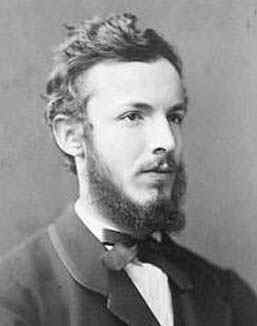
Figure 1: Georg Cantor source

Now Georg Cantor is one of my favourite mathematicians. Figure 1 shows a photograph of him as a young man. He was born on the 3rd March 1845 in St Petersburg, Russia, and died on the 6th January 1918 in Halle, Germany. At the time of this death, he was 72 years 10 months and 3 days old or 72.85 years of age which is equivalent to 26606 days. Thus he was 34 days older than I am now when he died. A short biography of his life can be found here.

So what is a Cantor set? Well, Wikipedia provides as good an explanation as any and I quote:

The Cantor ternary set \( \mathcal{C} \) is created by iteratively deleting the open middle third from a set of line segments. One starts by deleting the open middle third \( \left ( \frac{1}{3}, \frac{2}{3} \right ) \) from the interval \( \left [ 0,1 \right ] \), leaving two line segments: $$ \left [0,\frac{1}{3} \right ] \cup \left [ \frac{2}{3},1 \right ] $$Next, the open middle third of each of the remaining segments is deleted, leaving four line segments:$$ \left [0,\frac{1}{9} \right ] \cup \left [\frac{2}{9},\frac{1}{3} \right ] \cup \left [\frac{2}{3},\frac{7}{9} \right ] \cup \left [ \frac{8}{9},1 \right ]$$The Cantor ternary set contains all points in the interval \( \left [ 0,1 \right ] \) that are not deleted at any step in this infinite process. 

Figure 2 shows the situation diagrammatically:


Figure 2: source

Importantly, the article notes that:

In arithmetical terms, the Cantor set consists of all real numbers of the unit interval \( \left [ 0,1 \right ] \) that do not require the digit 1 in order to be expressed as a ternary (base 3) fraction ... It may appear that only the endpoints of the construction segments are left, but that is not the case either. The number \( \frac{1}{4} \) for example, has the unique ternary form:$$0.020202 \dots_{\scriptsize{3}} = 0.\overline{02}_{\scriptsize{3}}$$
So too does our "fraction of the day": $$\frac{1}{26572}=0.\overline{000000000202}_{\scriptsize{3}}$$Our "fraction of the day" made its appearance in OEIS A173793:


 A173793

Primitive numbers \(n\) such that \( \dfrac{1}{n} \) is in the Cantor set.         

The initial members of the sequence are:

1, 4, 10, 13, 28, 40, 82, 91, 121, 244, 328, 364, 730, 757, 820, 949, 1036, 1093, 2188, 2362, 2812, 2920, 3280, 6562, 6643, 7381, 9490, 9841, 19684, 20440, 26248, 26572, 28009, 29524, 59050, 59293, 63973, 65620, 66124, 66430, 84253, 88573, 177148

The fact that "1" cannot appear in the ternary expression of a number if it is to be in the Cantor set, makes it easy to write a program that generates this sequence. However, it is important to bear in mind the OEIS comments:

Sequence A121153 gives the \(n\) such that \(1/n\) is in the Cantor set. Most of those \(n\) are 3 times a smaller number in that sequence. This sequence (A173793) has only those terms in A121153 that are not 3 times a smaller number in the sequence.

Here is a permalink to the SageMathCell algorithm that will generate the sequence. 

In conclusion, it should be noted that the Cantor set is not countable and the Wikipedia article supplies a proof of this. The next two such primitive numbers after 26572 are 28009 and 29524 with reciprocals and ternary values as follows:$$ \begin{align} \frac{1}{28009}&=0.\overline{000000000200222022}_{\scriptsize{3}}\\ \frac{1}{29524}&=0.\overline{0000000002}_{\scriptsize{3}} \end{align} $$After that there is a big gap to 59050 with reciprocal and ternary value of:$$ \frac{1}{59050} =0.\overline{00000000002222222222}_{\scriptsize{3}}$$

Sunday, 19 December 2021

Mathematical Properties of 2022

It's always interesting to look at the mathematical properties of the number being used to mark the year ahead in the Anno Domini or AD system. At the time of creation of this post, that number is 2022. First and foremost, its factors should be considered and these are 2, 3 and 337 marking it as a so-called sphenic number because it is the product of three distinct primes. 

I've written about these sorts of numbers in two posts titled Sphenic Numbers on June 25th 2018 and Sphenic Numbers Revisited on January 1st 2018. All sphenic numbers have exactly eight divisors and in the case of 2022, these are 1, 2, 3, 6, 337, 674, 1011 and 2022.

2022 has the distinction of belonging to OEIS A105936:


 A105936

Numbers that are the product of exactly 3 primes and are of the form prime(\(n\)) + prime(\(n\)+1).


The initial members are:
8, 12, 18, 30, 42, 52, 68, 78, 138, 172, 186, 222, 258, 268, 410, 434, 508, 548, 618, 668, 762, 772, 786, 892, 906, 946, 978, 1002, 1030, 1132, 1334, 1374, 1446, 1542, 1606, 1758, 1866, 1878, 1948, 2006, 2022, 2252, 2334, 2414, 2452, 2468, 2486, 2572, 2588

It should be noted that not all members of this sequence are sphenic. For example, 12 is a member but it is not a product of three distinct primes because the factor 2 is repeated. In the case of 12, it can be seen that it is the sum of two consecutive primes viz. 5 and 7. For 2022, the two consecutive primes are 1009 and 1013. The fact that they are separated by 4 makes them cousin primes.

Consulting the Online Encyclopaedia of Integer Sequences or OEIS, the second sequence of interest is OEIS A141769:


 A141769

Beginning of a run of 4 consecutive Niven (or Harshad) numbers.  


The initial members of the sequence are:
1, 2, 3, 4, 5, 6, 7, 510, 1014, 2022, 3030, 10307, 12102, 12255, 13110, 60398, 61215, 93040, 100302, 101310, 110175, 122415, 127533, 131052, 131053, 196447, 201102, 202110, 220335, 223167, 245725, 255045, 280824, 306015, 311232, 318800, 325600, 372112, 455422

Harshad or Niven numbers as they are also called are simply numbers that are divisible by their sum of digits. In the case of 2022, it can be seen that it and the three consecutive numbers following it are Harshad. Let's confirm that:$$ \begin{align} \frac{2022}{6}&=337\\ \frac{2023}{7}&=289\\ \frac{2024}{8}&=278\\ \frac{2025}{5}&=405 \end{align}$$ As can be seen such runs are not common. However, it is possible to have runs of up to twenty consecutive Harshad numbers. See Figure 1.

I've written about Harshad numbers in posts titled Harshad Numbers on February 11th 2017 and Harshad Numbers Revisited on June 30th 2018. Figure 1 shows the start of consecutive runs up to 13. Note that the numbers from 1 to 10 are trivially Harshad.


Figure 1: permalink for calculating runs

The next interesting property of 2022 is that not only is it a Harshad number but so are all its powers up to the 7th power. Figure 2 confirms this (SOD stands for Sum Of Digits):


Figure 2: permalink

This property constitutes OEIS A135192:


 A135192

Numbers \(n\) that raised to the powers from 1 to \(k\) (with \(k \geq 1 \)) are multiple of the sum of their digits (\(n\) raised to \(k\)+1 must not be a multiple). Case \(k\)=7.


The initial members of the sequence are:
126, 480, 660, 810, 882, 1020, 1134, 1170, 1260, 1320, 1560, 1590, 2022, 3042, 3222, 4662, 4800, 5670, 5940, 6240, 6600, 7110, 7452, 8100, 8442, 8550, 8820, 8880, 9510, 10110, 10200, 10350, 10620, 10890, 11010, 11106, 11130, 11340, 11460, 11700, 11970
Not only is 2022 a Harshad number but it is also an admirable number, the latter being defined as a number whose sum of proper divisors is equal to the number itself with the proviso that one of the divisors is negative. In the case of 2022, its proper divisors are 1, 2, 3, 6, 337, 674 and 1011 which sum to 2034. However, if the +6 is made -6, then the sum becomes 2022. Moreover, 6 happens to be the digit sum of 2022 since 2 + 2 + 0 + 2 =6. This qualifies 2022 for membership is OEIS A111948


 A111948

Admirable Harshad numbers \(n\) such that the subtracted divisor is equal to the digital sum of \(n\).


The initial members of the sequence are:
24, 42, 114, 222, 402, 2022, 2202, 7588, 8596, 10014, 11202, 12102, 17668, 21102, 27748, 29764, 31002, 32788, 39844, 42868, 43876, 45388, 46396, 48916, 49924, 55972, 56476, 57484, 58492, 65548, 66556, 69076, 70588, 71596, 78148, 81676
2022 is also a self number because there is no number that, when added to its sum of digits, produces 2022. Thus it both a Harshad and a self number which qualifies it for membership in OEIS  A003219:


 A003219

Self numbers divisible by sum of their digits (or, self numbers which are also Harshad numbers).


The initial terms of the sequence are:
1, 3, 5, 7, 9, 20, 42, 108, 110, 132, 198, 209, 222, 266, 288, 312, 378, 400, 468, 512, 558, 648, 738, 782, 804, 828, 918, 1032, 1098, 1122, 1188, 1212, 1278, 1300, 1368, 1458, 1526, 1548, 1638, 1704, 1728, 1818, 1974, 2007, 2022, 2088, 2112, 2156, 2178 
I've written about self numbers in a post titled Self Numbers and Junction Numbers on October 25th 2018.

The next two interesting properties of 2022 involve primes (as did OEIS A105936 mentioned earlier). The first property qualifies it for admission in OEIS A023523 (permalink):


 A023523

a(\(n\)) = prime(\(n\))*prime(\(n\)-1) + 1.                                              


The initial members of the sequence are with prime(0) being considered as 1:
3, 7, 16, 36, 78, 144, 222, 324, 438, 668, 900, 1148, 1518, 1764, 2022, 2492, 3128, 3600, 4088, 4758, 5184, 5768, 6558, 7388, 8634, 9798, 10404, 11022, 11664, 12318, 14352, 16638, 17948, 19044, 20712, 22500, 23708, 25592, 27222, 28892
In the case of 2022, it is the product of the 14th prime (43) and the 15th prime (47) plus 1.

The second interesting property of 2022 involving primes qualifies it for membership in OEIS A064403:


 A064403


Numbers \(k\) such that prime(\(k\)) + \(k\) and prime(\(k\)) - \(k\) are both primes.  


The initial members of this sequence are:
4, 6, 18, 42, 66, 144, 282, 384, 408, 450, 522, 564, 618, 672, 720, 732, 744, 828, 858, 1122, 1308, 1374, 1560, 1644, 1698, 1776, 1848, 1920, 2022, 2304, 2412, 2616, 2766, 2778, 2874, 2958, 2970, 3036, 3042, 3240, 3258, 3354, 3360, 3432, 3540, 3594, 3732

In the case of 2022, the two primes are 19603 and 15559 respectively. 

This next property of 2022 is quite unusual and took me some time to fully grasp. This property qualifies the number for membership in OEIS A335600:


 A335600

The poor sandwiches sequence.                                                 


The sequence runs:
2, 1, 110, 10, 1101, 11010, 3, 330, 30, 3303, 33030, 4, 440, 40, 4404, 44040, 5, 550, 50, 5505, 55050, 6, 660, 60, 6606, 66060, 7, 770, 70, 7707, 77070, 8, 880, 80, 8808, 88080, 9, 990, 90, 9909, 99090, 11, 101, 1010, 22, 20, 202, 220, 2022, 2020, 33, 303, 3030, 44, 404, 4040, 55, 505, 5050, 66, 606, 6060, 77

 The OEIS comments help explain what it's all about:

Imagine we would have a pair of adjacent integers in the sequence like [1951, 2020]. The sandwich would then be made of the rightmost digit of a(n), the leftmost digit of a(n+1) and, in between, the absolute difference of those two digits. The pair [1951, 2020] would then produce the (poor) sandwich 112. 

Why poor? Because a rich sandwich would insert the sum of the digits instead of their absolute difference - that is 132 in this example. Please note that the pair [2020, 1951] would produce the poor and genuine sandwich 011 (we keep the leading zero: these are sandwiches after all, not integers).

Now we want the sequence to be the lexicographically earliest sequence of distinct positive terms such that the successive sandwiches emerging from the sequence rebuild it, digit after digit.

EXAMPLE

The first successive sandwiches are: 211, 101, 011, 011, 101, 033,...

The first one (211) is visible between a(1) = 2 and a(2) = 1; we get the sandwich by inserting the difference 1 between 2 and 1.

The second sandwich (101) is visible between a(2) = 1 and a(3) = 110; we get this sandwich by inserting the difference 0 between 1 and 1.

The third sandwich (011) is visible between a(3) = 110 and a(4) = 10; we get this sandwich by inserting the difference 1 between 0 and 1; etc.

The successive sandwiches rebuild, digit by digit, the starting sequence.

2022 is what is called an untouchable number because it is not equal to the sum of the proper divisors of any number. The untouchable numbers, up to and including 2022, are:

2, 5, 52, 88, 96, 120, 124, 146, 162, 188, 206, 210, 216, 238, 246, 248, 262, 268, 276, 288, 290, 292, 304, 306, 322, 324, 326, 336, 342, 372, 406, 408, 426, 430, 448, 472, 474, 498, 516, 518, 520, 530, 540, 552, 556, 562, 576, 584, 612, 624, 626, 628, 658, 668, 670, 708, 714, 718, 726, 732, 738, 748, 750, 756, 766, 768, 782, 784, 792, 802, 804, 818, 836, 848, 852, 872, 892, 894, 896, 898, 902, 926, 934, 936, 964, 966, 976, 982, 996, 1002, 1028, 1044, 1046, 1060, 1068, 1074, 1078, 1080, 1102, 1116, 1128, 1134, 1146, 1148, 1150, 1160, 1162, 1168, 1180, 1186, 1192, 1200, 1212, 1222, 1236, 1246, 1248, 1254, 1256, 1258, 1266, 1272, 1288, 1296, 1312, 1314, 1316, 1318, 1326, 1332, 1342, 1346, 1348, 1360, 1380, 1388, 1398, 1404, 1406, 1418, 1420, 1422, 1438, 1476, 1506, 1508, 1510, 1522, 1528, 1538, 1542, 1566, 1578, 1588, 1596, 1632, 1642, 1650, 1680, 1682, 1692, 1716, 1718, 1728, 1732, 1746, 1758, 1766, 1774, 1776, 1806, 1816, 1820, 1822, 1830, 1838, 1840, 1842, 1844, 1852, 1860, 1866, 1884, 1888, 1894, 1896, 1920, 1922, 1944, 1956, 1958, 1960, 1962, 1972, 1986, 1992, 2008, 2010, 2022

These numbers constitute OEIS A005114

2022 is a primitive abundant number, since it is smaller than the sum of its proper divisors, none of which is abundant.

2022 is a pseudoperfect number, because it is the sum of a subset of its proper divisors which are 1, 2, 3, 6, 337, 674 and 1011. If the subset {337, 674, 1011} is taken then we have 337 + 674 + 1011 = 2020.

2022 is a Zumkeller number, because its divisors can be partitioned in two sets with the same sum (2028). The divisors of 2022 are 1, 2, 3, 6, 337, 674, 1011 and 2022 and these sum to 4056 or 2 x 2028. There are four groupings of two sets satisfying the condition that each sum to 2028. These are:

  • 6, 2022 and 1, 2, 3, 337, 674, 1011
  • 1, 2, 3, 2022 and 6, 337, 674, 1011
  • 6, 337, 674, 1011 and 1, 2, 3, 2022
  • 1, 2, 3, 337, 674, 1011 and 6, 2022

There's a lot more that could be said about 2022 but I'll leave off with a reference to "dismal" arithmetic or "lunar" arithmetic as it's apparently been renamed. Here is a link to a PDF file of July 5th 2011 that explains what is meant by dismal arithmetic. It's free to download. The famous N.J.A. Sloane who created the OEIS is a co-author. Here is the abstract:

Dismal arithmetic is just like the arithmetic you learned in school, only simpler: there are no carries, when you add digits you just take the largest, and when you multiply digits you take the smallest. This paper studies basic number theory in this world, including analogues of the primes, number of divisors, sum of divisors, and the partition function.

2022 makes an appearance in lunar arithmetic via OEIS A170806:


 A170806

Primes in lunar arithmetic in base 3 written in base 3.   

 In Sloane's paper, there is the following definition:

Theorem 9. In base \(b\) dismal arithmetic, \(n\) is prime if and only if the dismal sum of its distinct dismal prime divisors is equal to \(n\).

I won't go further into this arithmetic in this post but perhaps I will later on.