Showing posts with label power. Show all posts

Monday, 24 June 2024

Energetic Numbers

I was surprised today to stumble upon a new category of number called energetic numbers. Such number are reasonably common: the 10,000th such number is 103,718. These sorts of numbers form OEIS A055480


 A055480

Energetic numbers: numbers that can be broken into two or more substrings and expressed as a sum of (possibly different) positive powers of those substrings.


The examples are given of \(142 = 14^1 + 2^7\) and \(8833 = 88^2 + 33^2\). This property is reminiscent of d-powerful numbers but with these only the individual digits can be used. For example, 27472 can be expressed as:$$27472= 2^3 + 7^4 + 4^3 + 7^5 + 2^{13}$$My diurnal age today is 27476 and, while it is not a d-powerful number, it is an energetic number because it can be expressed as follows:$$27476=27^3+4^6+7^4+6^4$$So it is almost a d-powerful number but not quite. The initial energetic numbers are:

24, 43, 63, 89, 100, 101, 102, 103, 104, 105, 106, 107, 108, 109, 132, 135, 142, 153, 175, 209, 224, 226, 262, 264, 267, 283, 284, 332, 333, 334, 357, 370, 371, 372, 373, 374, 375, 376, 377, 378, 379, 407, 445, 463, 518, 568, 598, 629, 739, 794, 809, 849, 935, 994, 1000


However, the OEIS reference has a link to a
text file that lists the first 10,000 such numbers. Unfortunately, the file does not list the representation of the number in terms of powers of substrings. For 27472, I had to simply experiment until I found the right combination. The text file contains the C program code used to generate the list. I used Google's Gemini to convert the code to Python but it wouldn't generate any output using SageMathCell.

The energetic numbers will contain the d-powerful numbers as a subset. The initial d-powerful numbers are:

24, 43, 63, 89, 132, 135, 153, 175, 209, 224, 226, 262, 264, 267, 283, 332, 333, 334, 357, 370, 371, 372, 373, 374, 375, 376, 377, 378, 379, 407, 445, 463, 518, 598, 629, 739, 794, 849, 935, 994

Comparing this sequence to OEIS A055480, it can be seen that 100 is the first energetic number that is not d-powerful because:$$ \begin{align} 100 &\neq 1^2 + 0^2 + 0^2 \text{ whereas}\\ 100 &=10^2 + 0^2 \end{align}$$Similarly for the numbers from 101 to 109. Here is a list of the energetic numbers between 27476 and 40000:

27476, 27479, 27493, 27496, 27497, 27498, 27527, 27529, 27536, 27549, 27562, 27568, 27569, 27617, 27635, 27639, 27663, 27697, 27720, 27736, 27747, 27749, 27752, 27764, 27765, 27790, 27817, 27823, 27856, 27892, 27923, 27962, 27972, 27984, 28132, 28160, 28203, 28224, 28228, 28243, 28245, 28260, 28261, 28262, 28263, 28264, 28265, 28266, 28267, 28268, 28269, 28288, 28306, 28332, 28336, 28355, 28375, 28395, 28403, 28423, 28425, 28449, 28513, 28519, 28532, 28533, 28534, 28536, 28539, 28553, 28554, 28569, 28574, 28593, 28599, 28603, 28607, 28613, 28682, 28730, 28731, 28732, 28733, 28734, 28735, 28736, 28737, 28738, 28739, 28819, 28932, 28937, 28955, 29130, 29232, 29253, 29259, 29263, 29287, 29319, 29324, 29342, 29343, 29346, 29347, 29349, 29369, 29370, 29385, 29435, 29436, 29444, 29454, 29474, 29532, 29543, 29586, 29634, 29637, 29732, 29734, 29744, 29755, 29765, 29769, 29835, 29853, 29923, 29943, 29947, 29967, 30135, 30153, 30175, 30236, 30243, 30257, 30289, 30312, 30340, 30341, 30342, 30343, 30344, 30345, 30346, 30347, 30348, 30349, 30373, 30375, 30427, 30445, 30600, 30601, 30602, 30603, 30604, 30605, 30606, 30607, 30608, 30609, 30628, 30935, 30964, 31032, 31096, 31122, 31131, 31169, 31216, 31234, 31237, 31296, 31314, 31324, 31339, 31342, 31346, 31347, 31362, 31366, 31376, 31385, 31393, 31452, 31455, 31549, 31558, 31563, 31636, 31673, 31695, 31852, 31920, 31921, 31922, 31923, 31924, 31925, 31926, 31927, 31928, 31929, 31932, 32052, 32072, 32097, 32214, 32234, 32235, 32252, 32254, 32256, 32275, 32296, 32297, 32325, 32326, 32327, 32342, 32355, 32364, 32367, 32368, 32436, 32437, 32492, 32524, 32525, 32527, 32528, 32548, 32562, 32565, 32587, 32588, 32595, 32635, 32637, 32655, 32672, 32722, 32731, 32743, 32749, 32780, 32781, 32782, 32783, 32784, 32785, 32786, 32787, 32788, 32789, 32792, 32793, 32800, 32801, 32802, 32803, 32804, 32805, 32806, 32807, 32808, 32809, 32810, 32811, 32812, 32813, 32814, 32815, 32816, 32817, 32818, 32819, 32820, 32821, 32822, 32823, 32824, 32825, 32826, 32827, 32828, 32829, 32830, 32831, 32832, 32833, 32834, 32835, 32836, 32837, 32838, 32839, 32840, 32841, 32842, 32843, 32844, 32845, 32846, 32847, 32848, 32849, 32850, 32851, 32852, 32853, 32854, 32855, 32856, 32857, 32858, 32859, 32860, 32861, 32862, 32863, 32864, 32865, 32866, 32867, 32868, 32869, 32870, 32871, 32872, 32873, 32874, 32875, 32876, 32877, 32878, 32879, 32880, 32881, 32882, 32883, 32884, 32885, 32886, 32887, 32888, 32889, 32890, 32891, 32892, 32893, 32894, 32895, 32896, 32897, 32898, 32899, 32903, 32905, 32907, 32908, 32913, 32914, 32917, 32918, 32922, 32923, 32924, 32925, 32926, 32927, 32928, 32930, 32931, 32932, 32933, 32934, 32935, 32936, 32937, 32938, 32939, 32940, 32941, 32942, 32943, 32944, 32945, 32946, 32947, 32948, 32949, 32952, 32953, 32954, 32963, 32965, 32968, 32969, 32973, 32978, 32979, 32980, 32981, 32982, 32983, 32984, 32985, 32986, 32987, 32988, 32989, 32994, 32995, 32997, 32998, 33020, 33021, 33022, 33023, 33024, 33025, 33026, 33027, 33028, 33029, 33042, 33068, 33078, 33084, 33087, 33102, 33106, 33123, 33125, 33134, 33158, 33162, 33165, 33182, 33219, 33220, 33221, 33222, 33223, 33224, 33225, 33226, 33227, 33228, 33229, 33236, 33242, 33246, 33247, 33260, 33261, 33262, 33263, 33264, 33265, 33266, 33267, 33268, 33269, 33272, 33273, 33274, 33276, 33282, 33283, 33284, 33286, 33288, 33292, 33298, 33318, 33322, 33338, 33372, 33387, 33398, 33413, 33422, 33427, 33428, 33429, 33442, 33447, 33467, 33485, 33486, 33512, 33532, 33538, 33539, 33548, 33562, 33568, 33578, 33582, 33592, 33622, 33623, 33624, 33642, 33648, 33658, 33677, 33685, 33686, 33752, 33757, 33772, 33775, 33778, 33779, 33786, 33792, 33798, 33804, 33822, 33823, 33824, 33826, 33828, 33829, 33830, 33834, 33842, 33843, 33844, 33846, 33847, 33864, 33865, 33872, 33873, 33874, 33878, 33882, 33884, 33893, 33942, 33952, 33954, 33957, 33974, 33987, 33992, 34036, 34038, 34112, 34118, 34131, 34146, 34162, 34186, 34217, 34226, 34230, 34231, 34232, 34233, 34234, 34235, 34236, 34237, 34238, 34239, 34244, 34254, 34256, 34265, 34268, 34272, 34274, 34276, 34279, 34290, 34291, 34292, 34293, 34294, 34295, 34296, 34297, 34298, 34299, 34322, 34323, 34326, 34327, 34342, 34366, 34367, 34374, 34377, 34387, 34388, 34402, 34423, 34439, 34472, 34474, 34498, 34525, 34526, 34528, 34529, 34542, 34562, 34568, 34578, 34638, 34652, 34672, 34674, 34677, 34689, 34698, 34727, 34728, 34739, 34746, 34762, 34766, 34770, 34771, 34772, 34773, 34774, 34775, 34776, 34777, 34778, 34779, 34784, 34786, 34832, 34834, 34836, 34852, 34869, 34872, 34873, 34874, 34892, 34922, 34924, 34925, 34928, 34947, 34948, 34980, 34981, 34982, 34983, 34984, 34985, 34986, 34987, 34988, 34989, 35022, 35024, 35032, 35080, 35081, 35082, 35083, 35084, 35085, 35086, 35087, 35088, 35089, 35178, 35203, 35205, 35208, 35213, 35216, 35220, 35221, 35222, 35223, 35224, 35225, 35226, 35227, 35228, 35229, 35231, 35233, 35243, 35245, 35247, 35248, 35274, 35284, 35285, 35287, 35289, 35323, 35332, 35352, 35358, 35372, 35378, 35427, 35447, 35487, 35488, 35522, 35552, 35598, 35625, 35628, 35630, 35662, 35688, 35738, 35809, 35825, 35845, 35848, 35885, 35887, 35912, 35930, 35931, 35932, 35933, 35934, 35935, 35936, 35937, 35938, 35939, 35978, 35979, 35992, 35994, 36104, 36114, 36122, 36144, 36152, 36158, 36164, 36232, 36234, 36237, 36239, 36253, 36254, 36258, 36274, 36275, 36277, 36278, 36283, 36292, 36294, 36296, 36314, 36324, 36327, 36332, 36342, 36343, 36346, 36348, 36368, 36382, 36385, 36408, 36412, 36417, 36435, 36437, 36438, 36454, 36457, 36472, 36473, 36474, 36478, 36492, 36497, 36522, 36544, 36547, 36558, 36567, 36568, 36637, 36656, 36657, 36693, 36708, 36719, 36722, 36723, 36724, 36731, 36733, 36742, 36743, 36746, 36748, 36762, 36775, 36789, 36837, 36854, 36877, 36892, 36922, 36924, 36942, 36980, 36981, 36982, 36983, 36984, 36985, 36986, 36987, 36988, 36989, 37002, 37045, 37072, 37083, 37102, 37177, 37215, 37216, 37220, 37221, 37222, 37223, 37224, 37225, 37226, 37227, 37228, 37229, 37242, 37243, 37244, 37246, 37248, 37262, 37263, 37264, 37265, 37267, 37268, 37282, 37283, 37284, 37306, 37332, 37333, 37336, 37348, 37352, 37353, 37358, 37372, 37392, 37393, 37410, 37412, 37420, 37421, 37422, 37423, 37424, 37425, 37426, 37427, 37428, 37429, 37442, 37443, 37449, 37455, 37462, 37482, 37483, 37484, 37485, 37486, 37578, 37626, 37642, 37645, 37648, 37663, 37687, 37702, 37714, 37732, 37738, 37747, 37794, 37826, 37827, 37843, 37851, 37867, 37884, 37953, 37997, 38124, 38133, 38145, 38164, 38235, 38257, 38272, 38317, 38322, 38324, 38325, 38326, 38343, 38345, 38348, 38349, 38372, 38382, 38383, 38394, 38456, 38474, 38514, 38521, 38522, 38527, 38560, 38563, 38566, 38576, 38655, 38657, 38746, 38762, 38834, 38835, 38923, 38924, 39142, 39276, 39338, 39340, 39341, 39342, 39343, 39344, 39345, 39346, 39347, 39348, 39349, 39352, 39354, 39368, 39372, 39373, 39384, 39392, 39393, 39402, 39420, 39421, 39422, 39423, 39424, 39425, 39426, 39427, 39428, 39429, 39432, 39442, 39443, 39446, 39462, 39469, 39472, 39482, 39483, 39484, 39485, 39532, 39533, 39536, 39538, 39608, 39623, 39624, 39627, 39628, 39629, 39634, 39642, 39648, 39662, 39682, 39687, 39689, 39734, 39749, 39752, 39758, 39822, 39823, 39825, 39827, 39834, 39842, 39844, 39848, 39864, 39882, 39884, 39886

As with the energetic numbers 100 to 109 inclusive, runs of consecutive integers are common e.g. 30600, 30601, 30602, 30603, 30604, 30605, 30606, 30607, 30608, 30609 where we have:$$30600 = 30^3+60^2+0$$and the digits 1 to 9 can be substituted for the zero and the numbers remain energetic.

Friday, 31 May 2024

Taneja's Number Theory Papers

Inder J. Taneja
Federal University of Santa Catarina
Ph.D. from Delhi University, India

In my previous post titled Fibonacci Sequence and Selfie Numbers, I referenced a paper by Inder J. Taneja with the same title. I mentioned too that he has published many interesting Number Theory related papers and in this post I aim to summarise some of them and provide links to them. Looking back at my previous posts I discovered that I had made reference to two of Taneja's papers in a post titled Selfie Numbers (March 2020). Let's begin.

Natural numbers from 0 to 11111 are written in terms of 1 to 9 in two different ways. The first one in increasing order of 1 to 9, and the second one in decreasing order. This is done by using the operations of addition, multiplication, subtraction, potentiation and division. In both the situations there are no missing numbers, except one (10958) in the increasing case.

In this work, the numbers have been written in terms of increasing and decreasing orders of the digits in a consecutive way. To write these numbers, the operations used are: addition, subtraction, multiplication, potentiation, division, factorial and square-root. We named these numbers as selfie numbers, because of the fact that they have same digits on both sides of the expressions.

In this work, we established symmetric representation of numbers where one can use any of 9 digits giving the same number. The representations of natural numbers from 0 to 1000 are given using only single digit in all the nine cases, i.e., 1, 2, 3, 4, 5, 6, 7, 8 and 9. This is done only using basic operations: addition, subtraction, multiplication, potentiation and division.

In this work, we established symmetric representation of numbers where one can use any of 9 digits giving the same number. The representations of natural numbers from 0 to 1000 are given using only single digit in all the nine cases, i.e., 1, 2, 3, 4, 5, 6, 7, 8 and 9. This is done only using basic operations: addition, subtraction, multiplication, potentiation, division.

In this work, the numbers have been written in order of digits and their reverse, generally famous as ”pretty wild narcissistic numbers”. To write these numbers, the operations used are: addition, subtraction, multiplication, potentiation, division, factorial, square-root. For simplicity, these representations are named as selfie numbers. These representations have same digits on both sides of the expressions with the properties that, they are either in order of digits or in reverse order. The work is separated in different types, such as, Palindromic, Symmetrical consecutive, Sequential selfies, etc.

This is first work of its kind. It brings representations of natural numbers from 0 to 3000 in terms of single letter a. For any value of letter a from 1 to 9, the result is always same. Four basic operations, i.e., addition, subtraction, multiplication and division are used to bring these representations. A separate section is dedicated to numbers with potentiation. Palindromic symmetries and number patterns in terms of letter a are also studied

This work brings representations of palindromic and number patterns in terms of single letter ”a”. Some examples of prime number patterns are also considered. Different classifications of palindromic patterns are considered, such as, palindromic decompositions, double symmetric patterns, number pattern decompositions, etc. Numbers patterns with power are also studied. Study towards Fibonacci sequence and its extensions is also made.

This work brings representations of palindromic and number patterns in terms of single letter ”a”. Some examples of prime number patterns are also considered. Different classifications of palindromic patterns are considered, such as, palindromic decompositions, double symmetric patterns, number pattern decompositions, etc. Numbers patterns with power are also studied.

In previous works, the construction of Selfie numbers is done in different forms, such as in order of digits, in reverse order of digits, in increasing and decreasing orders of digits. This has been done using factorial and square-root with basic operations. In this paper, we worked with Selfie numbers having all the four ways of representations at the same time. These numbers are called ”unified Selfie numbers”.

The idea of this work is to bring patterns in Selfie numbers. This we have done in two different ways. One is in order of digits and second is in decreasing order. The is limited only up to six  digits. Up to five digits, we worked with square-root and factorial. For six digits the work is only for square-root.

In previous works, the construction of Selfie numbers is done in different forms, such as in order of digits, in reverse order of digits, in increasing and decreasing orders of digits. This has been done using factorial and square-root with basic operations. This work is improvement over the above works specially in case of increasing and decreasing order of digits. Symmetrical consecutive and unified Selfie numbers are also presented.

In previous works, the construction of Selfie numbers is done in different forms, such as in order of digits, in reverse order of digits, in increasing and decreasing orders of digits. This has been done using factorial and square-root with basic operations. In this work we have obtained Selfie numbers having six digits with repetitions without use of factorial. Symmetrical consecutive and unified Selfie numbers are also presented.

In previous works, the construction of Selfie numbers is done in different forms, such as in order of digits, in reverse order of digits, in increasing and decreasing orders of digits. This has been done using factorial and square-root with basic operations. This work is restricted up to five digits only with factorial and without use of square-root. Studies including square-root can be seen in author’s work.

This paper works with representations of numbers with same digits on both sides of the expressions. The representations are made with the power of same digits as of numbers using only addition and subtraction signs. This is done only for eight and nine different digits. 

This paper works with representations of natural numbers from 0 to 11111 written in terms of expressions with additions, subtractions and exponents. Digits used are from 1 to 9 in such a way that for each number, there are same digits in bases and exponents with different permutations. Some numbers can be written in more than one way, but we have chosen with less possible expressions. 

This paper works with extensions of narcissistic numbers in different situations. Extensions are made for positive and negative coefficients, fixed and flexible powers. The idea is extended for narcissistic numbers with division. Here also different situations are considered, such as, positive and negative coefficients, fixed and flexible powers. Comparison with previous known numbers are also given. 

Narcissistic numbers are famous in literature. There are very few narcissistic numbers with division. In this work we brought some narcissistic number with division in terms of floor function.

This work brings representations of natural numbers in two different ways. In both the representations same digits are used always ending in 0 such as, 210, 3210, etc.. 

This paper works with representations of numbers in such a way that we have same digits on both sides of the expressions. One side is just number and other side formed by bases and exponents with same digits as of numbers. The expressions are joined by the operations of addition and/or subtraction. These numbers are called ”flexible power selfie numbers”. In this paper, we worked up to width 7, where up to width 6 there are repetition in digits. From width 7 onwards, results are without any repetition. 8 and 9 width numbers are done in subsequent papers.

This paper works with representations of numbers in such a way that we have same digits on both sides of the expressions. One side is just number and other side formed by bases and exponents with same digits as of numbers. The expressions are joined by the operations of addition and/or subtraction. These numbers are called ”flexible power selfie numbers”. In this paper, we worked with width 8 numbers.

This paper works with representations of numbers in such a way that we have same digits on both sides of the expressions. One side is just number and other side formed by bases and exponents with same digits as of numbers. The expressions are joined by the operations of addition and/or subtraction. These numbers are called ”flexible power selfie numbers”. In this paper, we worked with width 9 numbers. 

This work brings representations of natural numbers from 0 to 2016 in two different ways. In both the representations, the same digits from 7 to 0 are used in decreasing order. 

This work brings representations of natural numbers in two different ways. In both the representations same digits are used always ending in 0 such as, 210, 3210, etc.. 

A addable fraction is a proper fraction where addition signs can be inserted into numerator and denominator, and the resulting fraction is equal to the original. This work brings addable fractions in different situations. One for multiple choices, and second for single representations. In each fraction, the numerator less than denominator, and there is no repetition of digits. 

A dottable fraction is a proper fraction where multiplication signs can be inserted into numerator and denominator, and the resulting fraction is equal to the original. The same happens with potentiation. In this case we call it potentiable fraction. This work brings dottable fractions and dottable fractions with potentiation in different situations without repetition of digits. The work is limited up to six digits in the denominator. 

A addable fraction is a proper fraction where addition signs can be inserted into numerator and denominator, and the resulting fraction is equal to the original. The same is true for dottable fractions, i.e., instead of additions we have multiplication. In this work we have written fractions having both the operations, i.e., addition and multiplication. The work is for different digits, i.e., there is no repetition of digits in the same fraction. Also, the numerator is less than denominator. 

A addable fraction is a proper fraction where addition signs can be inserted into numerator and denominator, and the resulting fraction is equal to the original. The same is true for subtractable fractions, i.e., instead of additions we have substraction. In this work we have written symmetric equivalent fractions having both the operations, i.e., one side is addition and another side is subtraction written in symmetric way. The work is for different digits, i.e., there is no repetition of digits in the same fraction. Also, the numerator less than denominator. 

A addable fraction is a proper fraction where addition signs can be inserted into numerator and denominator, and the resulting fraction is equal to the original. The same is true for dottable fractions, i.e., instead of additions we have multiplication. In this work, we have written equivalent selfie fractions having both the operations, i.e., addition and multiplication together. The work is for different digits, i.e., there is no repetition of digits in the same fraction. Also, the numerator is less than denominator. For the case of pandigital selfie fractions, only few are considered, where each representation is more than 17 times. 

This work brings representations of natural numbers from 0 to 2016 in two different ways. In both the representations the digits used are 8 to 0 in decreasing order.

This work brings representations of natural numbers from 0 to 2016 in two different ways. In both the representations the digits used are 9 to 0 in decreasing order. 

This work brings natural numbers from 0 to 1000 with representations given in decreasing order in different forms written in pyramidical way 

This work brings natural numbers from 0 to 11111 written in terms of 0 to 9 in symmetrical way, with powers as permutations of same digits 0 to 9. 

This work brings representations of natural numbers in three different ways. One is based on power of same digits used in bases with permutations. The other two are based on increasing and decreasing orders of digits by use of basic operations along with square-root and factorial. Number of digits in each representation are understood as width. This work is up to 6 digits or width 6. 

Taneja has 315 publications listed on his ResearchGate site. I'll probably create some posts based on his papers in the near future.

Tuesday, 28 March 2023

2023 TO THE POWER OF 2023

This is a puzzle that appeared on March 27th 2023 as a post in a blog titled PUZZLE A DAY. The challenge is to find the last digit of 2023 to the power of 2023? The clue provided is that there is a pattern to be found. Work out the last digit of 2023 to the power of 1, 2, 3, 4 and 5.

I used SageMathCell to generate the numbers for 2023 raised to the powers 1 to 12. The results were (permalink):

\(2023^1 \rightarrow 2023\)
\(2023^2 \rightarrow 4092529\)
\(2023^3 \rightarrow 8279186167\)
\(2023^4 \rightarrow 16748793615841\)
\(2023^5 \rightarrow 33882809484846343\)
\(2023^6 \rightarrow 68544923587844151889\)
\(2023^7 \rightarrow 138666380418208719271447\)
\(2023^8 \rightarrow 280522087586036239086137281\)
\(2023^9 \rightarrow 567496183186551311671255719463\)
\(2023^{10} \rightarrow 1148044778586393303510950320473649\)
\(2023^{11} \rightarrow 2322494587080273653002652498318191927\)
\(2023^{12} \rightarrow 4698406549663393600024366004097702268321\)

The repeating pattern 1, 3, 9, 7 of final digits is apparent. This is not surprising when we consider that it is only the final digit that we are interested in and that 3 raised to the same powers produces the same pattern:

\(3^1 \rightarrow 3\)
\(3^2 \rightarrow 9\)
\(3^3 \rightarrow 27\)
\(3^4 \rightarrow 81\)
\(3^5 \rightarrow 243\)
\(3^6 \rightarrow 729\)
\(3^7 \rightarrow 2187\)
\(3^8 \rightarrow 6561\)
\(3^9 \rightarrow 19683\)
\(3^{10} \rightarrow 59049\)
\(3^{11} \rightarrow 177147\)
\(3^{12} \rightarrow 531441\)

Every power that is a multiple of 4 ends in a 1 and so all we need to do is to divide 2023 by 4 which leaves a remainder of 3. Thus 2023 to the power 2023 is three positions ahead of the 1 and so the final digit must be 7. In general, any number that ends in 3, when raised to consecutive powers, will follow this same 1, 3, 9, 7 pattern just as 3 and 2023 do.

Generalising, we can look at numbers ending in digits 0 to 9. Here is the pattern for integer powers greater than zero:
  • 0 --> numbers ending in 0 will always end in 0
  • 1 --> numbers ending in 1 will always end in 1
  • 2 -->  numbers ending in 2 will follow a 2, 4, 8, 6 pattern
  • 3 -->  numbers ending in 3 will follow a 1, 3, 9, 7 pattern
  • 4 --> numbers ending in 4 will follow a 4, 6 pattern
  • 5 --> numbers ending in 5 will always end in 5
  • 6 --> numbers ending in 6 will always end in 6
  • 7 --> numbers ending in 7 will follow a 1, 7, 9, 3 pattern
  • 8 --> numbers ending in 8 will follow a 2, 6, 8, 4 pattern
  • 9 --> number ending in 9 will follow a 1, 9 pattern

So a question like what is final digit of 2028 raised to the power 2028 is easily answered. Let's look at the powers of 2028 from 1 to 12:

\(2028^1 \rightarrow 2028\)
\(2028^2 \rightarrow 4112784\)
\(2028^3 \rightarrow 8340725952\)
\(2028^4 \rightarrow 16914992230656\)
\(2028^5 \rightarrow 34303604243770368\)
\(2028^6 \rightarrow 69567709406366306304\)
\(2028^7 \rightarrow 141083314676110869184512\)
\(2028^8 \rightarrow 286116962163152842706190336\)
\(2028^9 \rightarrow 580245199266873965008154001408\)
\(2028^{10} \rightarrow 1176737264113220401036536314855424\)
\(2028^{11} \rightarrow 2386423171621610973302095646526799872\)
\(2028^{12} \rightarrow 4839666192048627053856649971156350140416\)

All multiples of 4 end in 6 and if we divides 2028 by 6 we get 0 and so 2028 raised to the power 2028 must end in 6 as well. This is just my way of looking at the problem and there are surely other approaches.

Overall the PUZZLE A DAY site looks interesting, providing as it does a little mathematical challenge each day.

Wednesday, 22 February 2023

Modest Numbers (Continued)

CONTINUED FROM PREVIOUS POST

I'm having to run the previous blog post into this new post because I found that the word wrap wasn't working despite numerous efforts to fix it. 

In this continuation, I want to mention the fact that some numbers are "modest" in two ways not just one. Here is a list of such numbers in the range up to 40,000:

1333, 1999, 2333, 2666, 2999, 3999, 4666, 4999, 5999, 6999, 7999, 8999, 11111, 13333, 19999, 21111, 22222, 23333, 26666, 29999, 31111, 33333, 39999

As can be seen, all numbers have many repeated digits. Let's look at the first number in the list, 1333. We see that:$$ \begin{align} 1333 \! \!\! \mod 33 \equiv 13\\1333 \! \! \! \mod 333 \equiv 1 \end{align} $$Once we extend the range to one million, we find some numbers that are "modest" in three ways. These are:

133333, 199999, 233333, 266666, 299999, 399999, 466666, 499999, 599999, 699999, 799999, 899999

Taking the first number in the list above, 133333, we find that:$$ \begin{align} 133333 \! \!\! \mod 333 \equiv 133\\133333 \! \! \! \mod 3333 \equiv 13\\133333 \! \! \! \mod 33333 \equiv 1 \end{align} $$Clearly there is a pattern here and if we were to extend the range even further we would find that there are numbers that are modest in four ways and more. For example, 13333333 is "modest" is four ways:$$ \begin{align} 13333333 \! \!\! \mod 3333 \equiv 1333\\13333333 \! \! \! \mod 33333 \equiv 133\\13333333 \! \! \! \mod 333333 \equiv 13\\13333333 \! \! \! \mod 3333333 \equiv 1 \end{align} $$Once the algorithm for splitting any two digit number or larger into two parts is in place, it can be applied to other scenarios other than modest numbers. For example, consider this scenario where we define a "digestible" number for want of a better term as follows:

A number \(n\) is called digestible if its digits can be separated into two numbers \(a\) and \(b\) such that \( n\) divides evenly into \(a^b\).

In the range up to 40,000, there are 41 numbers that satisfy this criterion. They are (permalink):

128, 256, 486, 648, 729, 1024, 1296, 2048, 2187, 3072, 4096, 6075, 6144, 6561, 6912, 8192, 10240, 12288, 13824, 14336, 15488, 15625, 16384, 16807, 17496, 18432, 20480, 21609, 22528, 24576, 26624, 27648, 28672, 30375, 30720, 32768, 33614, 34816, 35721, 36864, 38912

The details for each number are as follows:


Figure 1

Let's take the first number in this list, 128, that divides evenly into 12 raised to the 8th power. Now 12 raised to the 8th power is 429981696 and 128 | 429981696 = 3359232. This is just an example of the sorts of investigations that can be carried out. Notice how all the powers of 2 are represented.

Thursday, 15 September 2022

What's Special About 3435?

The number 3435 has the honour of being the only base 10 Munchausen number. So what is a Munchausen number? Wikipedia provides this definition:

A Munchausen number is a natural number in a given number base \(b\) that is equal to the sum of its digits each raised to the power of itself. An example in base 10 is 3435, because \(3435=3^3+4^4+3^3+5^5\). The term "Munchausen number" was coined by Dutch mathematician and software engineer Daan van Berkel in 2009, as this evokes the story of Baron Munchausen raising himself up by his own ponytail because each digit is raised to the power of itself.

Of course, the number 1 qualifies as well but this is trivial and can be ignored. The only rival to 3435 comes in the form of 438579088 but runs into the problem of what the value of \(0^0\) is. If we take \(0^0=0\) then it does qualify because:$$438579088 = 4^4+3^3+8^8+5^5+7^7+9^9+0^0+8^8+8^8$$However, \(0^0\) is also commonly evaluated as 1 (see link) and so there is an ambiguity surrounding 438579088. If we take \(0^0=0\) then it does qualify as a Munchausen number but if we take \(0^0=1\), it doesn't. 3425 however, suffers from no such ambiguity.

Let's spell out 3435's unique property in large type:

\(3435=3^3+4^4+3^3+5^5\)

There are Munchausen numbers in other number bases as well but in this post I'm just focusing on base 10. Here is a permalink for identifying Munchausen numbers in base 10.

Saturday, 12 March 2022

Third Order Odds and Evens Trajectory for Numbers 1 to 10.

My previous post was titled Second Order Odds and Evens Trajectory for Numbers 1 to 99 and in this post I will be looking at the behaviour of the numbers from 1 to 10 under the recursive rule:

number --> number + \( \sum d_o^3 - \sum d_e^3 \) 

where \( d_o^3 \) are the number's odd digits raised to the power \( 3\) and \( d_e^3 \) are the number's even digits raised to the power \( 3\).  There is more variability with the numbers when \(k=3\) so I'm restricting my analysis to just the numbers from 1 to 10. A full analysis from 1 to 99 would be too lengthy but this is the beginning of the third order analysis and I'll follow up with more numbers in a future post.

Figure 1 shows the trajectory for the number 1. The entire trajectory consists of 161 steps and begins with 1, 2, -6, 210, 203, 222, 198, ... . The numbers that are in the final loop are {-7721, -8400, -7824, -7583, -7566, -7602}. The minimum value reached is -8441.

Figure 1

Here we see how the power of 3 drives the trajectory into increasingly negative territory until there is a brief rally after which the loop is reached.
 
2 is on exactly the same trajectory as 1 since 1 --> 2 under the odds and evens rule.

3 has a brief trajectory of only 14 steps: 3, 30, 57, 525, 767, 1237, 1600, 1385, 1026, 803, 318, -166, 265, 166, -265, -166 and ends in the loop {-166, 265, 166, -265}. See Figure 2.

Figure 2

30 and 57 also lie on the path of 3 and thus end in the same {-166, 265, 166, -265} loop.

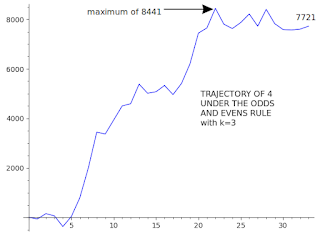
4 follows a similar pattern to 1 and 2 except that the maximum value is +8441 and the loop is the same except that the members are positive {7721, 8400, 7824, 7583, 7566, 7602}. See Figure 3.


Figure 3

5 and 6 and 7 have lengthy trajectories but eventually end up in the same positive loop as 4.

8 produces a new trajectory that plummets to a record low of -34870 and ends in the loop {-34203, -34185, -33762, -33935, -34870, -34664, -34131, -34123, -34106, -33854, -33457, -33915, -34824} after 169 steps. See Figure 4.


Figure 4

9 follows a similar trajectory to 1 and 2 ending in the negative loop {-7721, -8400, -7824, -7583, -7566, -7602}.

10 follows a similar trajectory to 4, 5, 6 and 7 ending in the positive loop {7721, 8400, 7824, 7583, 7566, 7602}. 

So in summary:

  • 1, 2 and 9 end in the loop {-7721, -8400, -7824, -7583, -7566, -7602}.
  • 3 ends in the loop {-166, 265, 166, -265}.
  • 4, 5, 6, 7 and 10 end in the loop {7721, 8400, 7824, 7583, 7566, 7602}. 
  • 8 ends in the loop {-34203, -34185, -33762, -33935, -34870, -34664, -34131, -34123, -34106, -33854, -33457, -33915, -34824}.

Saturday, 5 February 2022

Apocalyptic Numbers


X-Men: Apocalypse (2016)

Numbers Aplenty has to say about apocalyptic numbers:

A number of the form \(2^n\) is called apocalyptic if its digits contain "666" as a substring. The smallest apocalyptic number is \(2^{157}\), which is equal to:$$182687704\underline{666}362864775460604089535377456991567872$$while \(2^{220}\) is the smallest apocalyptic number which contains two 666 groups, being equal to:$$ {\tiny 168499\underline{66666}969149871\underline{666}88442938726917102321526408785780068975640576} $$The smallest power of 2 with 3 groups is \(2^{931}\).

A number \(n\) such that \(2^n\) is apocalyptic is called an apocalyptic power or apocalyptic exponent.

Between \(1\) and \(3 \times 10^6\) there are 3715 numbers which are non-apocalyptic exponents, the largest being 29784. In other words, it is highly probable that \(2^n\) for \(n \ge 29785\) is an apocalyptic number.

Probably there are only 8 numbers, namely 2666, 3666, 5666, 6660, 6665, 6669, 11666, 26667 which contains 666 among their digits but are not apocalyptic exponents.

The first apocalyptic exponents are 157, 192, 218, 220, 222, 224, 226, 243, 245, 247, 251, 278, 285, 286, 287, 312, 355, 361, 366, 382, 384, 390, 394, 411, 434, 443, 478, 497, 499, 506, ...

Here is a link to the first 1000 apocalyptic exponents. As the numbers get larger, the frequency of numbers being non-apocalyptic exponents decreases so that, after 29874, the frequency is (probably) zero. For example, in the range from 20000 to 30000, there are only the following non-apocalyptic exponents:

20271, 20300, 20509, 20644, 20710, 21077, 21600, 21602, 22447, 22734, 23097, 23253, 24422, 24441, 25026, 25357, 25896, 26051, 26667, 29784

Why this interest in apocalyptic numbers? Well, in my diurnal age count, I've entered what might be termed an "apocalyptic phase". I'm currently 26606 days old and heading toward 26666 (the latter occurs a day before my 73rd birthday). Interestingly, as can be seen in the range of numbers above, 26667 is the second last non-apocalyptic exponent.

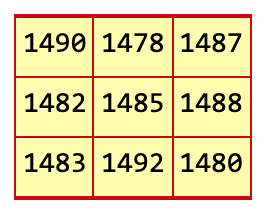
Numbers Aplenty also shows the smallest 3 × 3 magic square made of consecutive apocalyptic numbers. See Figure 1.

Figure 1

The apocalyptic powers comprise OEIS A007356:


 A007356

Apocalyptic powers: \(2^n\) contains \(666\).                           
                                

Finally, let's not forget that:
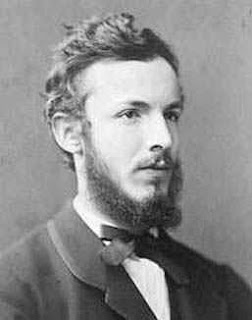
Georg Cantor was born on the 3rd March 1845 in St Petersburg, Russia, and died on the 6th January 1918 in Halle, Germany. At the time of this death, he was 72 years 10 months and 3 days old or 72.85 years of age which is equivalent to 26606 days.

Georg Cantor

This is the exact age that I am today.