One of the properties of the number associated with my diurnal age today is that it represents the surface area (rounded to the nearest whole number) of a dodecahedron with an edge of 37 units. The formula and result is shown below where \(n\) represents edge length:$$ \begin{align} \text{Surface Area } &= 3 \times n^2 \times \sqrt{{25} + 10 \times \sqrt{5}} \\ &= 3 \times 37^2 \times \sqrt{25 + 10 \times \sqrt{5}} \text{ when }n=37\\ \\&= 28264.0027368755 \dots \\ \\ &\approx 28264 \end{align}$$What's special about the dodecahedron with an edge of 37 units is how close its exact surface area approaches a whole number. The table below shows the results for edges from 1 to 44:
Clearly the dodecahedron with edge of 37 units is a clear winner as it has a surface area that differs by only about 0.003 from its surface area when rounded to the nearest whole number.
The number associated with my diurnal age today (28262) is what might be termed a "super sphenic number" as I'll explain in this post. Firstly however, its factorisation:$$28262=2 \times 13 \times 1087$$If we reverse its digits, we get the number 26282 and this number is also sphenic:$$26282 = 2 \times 17 \times 773$$Let's now concatenate the factors of 28262 in ascending order. This gives us the number 2131087 which is also sphenic:$$2131087 = 7 \times 167 \times 1823$$28262 has a sum of digits of 20 and if we add this to the original number we get the palindromic number 28282 which is also sphenic:$$28262+20=28282 = 2 \times 79 \times 179$$The number has a product of digits of 384 and if we subtract this from the original number we get 27878 which is sphenic:$$28262 - 384 = 27878 = 2 \times 53 \times 263$$If we consider only the internal digits of 28262, we get the number 826 which is also sphenic:$$2\, 826 \, 2 \rightarrow826=2 \times 7 \times 59$$When a sphenic number is considered as a sphenic brick then it has an associated number in the form of the brick's surface area. In the case of 28262, this associated surface area is 32662 square units and this number too is sphenic:$$32662 = 2 \times 7 \times 2333$$28262 has a sum of proper divisors that is also sphenic:$$ \sigma(28262) - 28262 =17434 = 2 \times 23 \times 379 $$The number has a sum of prime factors (1102) that is sphenic:$$2 +13+1087=1102 = 2 \times 19 \times 29$$28262 has a totient of 13032 which is not sphenic but its cototient (number - totient) of 15230 is:$$28262 - 13032 = 15230 = 2 \times 5 \times 1523$$So we can see that 28262 may well be termed a super sphenic number because of the above associations.
Whenever I'm confronted with a number associated with my diurnal age that seems to have no interesting properties, I inevitably find something very special and interesting about that number. Yesterday's number, 27542, was a number of this sort and it took me a day to stumble upon what's interesting about it.
My starting point was that it's a sphenic number because:$$2542=2 \times 47 \times 293$$Such numbers can be viewed as sphenic bricks with the three prime factors corresponding to the length, width and height. The surface area of such a brick means that there is always a second number that is inextricably linked to the original sphenic number and I've written about this in earlier posts. In the case of 27542, this second number and the surface area of the brick is 28902. This second number however, is also sphenic since we have:$$28902=2 \times 3 \times 4817$$This means that we can find the surface area of this second brick. It is 48182 which is not sphenic. However, we now have a triplet of numbers formed:$$27542, 28902, 48182$$If we find the product of these three numbers, it turns out to be an interesting number:$$27542 \times 28902 \times 48182 = 38353781868888$$It's interesting because it's 14 digits long and the digit 8 comprises precisely half of them.
The question then is how common is it for such triplets of numbers, when multiplied, to generate a number in which a single digit comprises at least 50% of all the digits? Let's reflect on the criteria for such numbers:
the number must be sphenic and constitutes the first sphenic brick: p
the surface area of this brick must also be a sphenic number: q
this second number constitutes the second sphenic brick
the surface area of this second brick constitutes the third number: r
the product of p, q and r must contain a digit that comprises at least 50% of the digits of the number.
In the case of the digit 8, there are only three other numbers that qualify in the range up to 100,000 and these can be viewed in Figure 1. The first number in the list is 27542.
Figure 1: plethora of the digit 8
So it turns out that 27542 is the first member of a rather special sequence indeed. What about other digits? Let's start with 0. Figure 2 shows the results for the digit 0, again up to 100,000.
Figure 2: plethora of the digit 0
The results for the digit 1 are shown in Figure 3.
Figure 3: plethora of the digit 1
For digits 2 and 3 there are no numbers and the results for digit 4 are shown in Figure 4.
Figure 4: plethora of the digit 4
For digit 6, 7 and 9 only one result is found in each case. See Figures 5, 6, 7 and 8.
Figure 5: plethora of the digit 5
Figure 6: plethora of the digit 6
Figure 7: plethora of the digit 7
Figure 8: plethora of the digit 9
Here is a permalink to the algorithm used to generate these numbers. Overall then, the numbers which produce a single digit that accounts for at least 50% of the final product of digits are:
A very exclusive club indeed. Of course these number properties are base-dependent and so fall into the realm of recreational mathematics but numberphiles are indifferent to such divisions and simply delight in the dance of the digits.
The Horn Torus is a solid that if formed by the revolution of a circle around a point on its circumference. Suppose the starting circle has a diameter of 1 unit and thus a circumference of \(\pi\) units. Consider a small rotation of length \( \delta x\) along the outer circumference that produces a wedge-shaped solid that is equivalent to a cylinder of curved surface area \(\pi \delta x/2\). The total surface area of the resultant torus is given by:$$\begin{align} \text{Surface Area }&=\lim_{\delta x \rightarrow 0} \sum_0^{2\pi} \pi \, \delta x/2 \\ &=\int_0^{2\pi} \! \! \pi/2 \, dx\\&=\bigg [ \pi \, x/2 \bigg ]_0^{ 2\pi}\\&=\pi^2 \end{align}$$This is beautifully simple. If we envisage \(\pi\) as the area of a circle with unit radius then \( \pi^2 \) can be envisaged as the surface area of a horn torus with unit tube diameter.
While we're here, we may as well calculate the volume of a horn torus with a unit tube diameter. The calculation of volume is very similar to that of the surface area. Consider a small rotation of length \( \delta x\) along the outer circumference that produces a wedge-shaped solid that is equivalent to a cylinder of cross-sectional area \( \pi/4\) and thickness \( \delta x/2\). The volume of this wedge shape is \(\pi \, \delta x/8\). The total volume of the resultant torus is given by:$$\begin{align} \text{Volume }&=\lim_{\delta x \rightarrow 0} \sum_0^{2\pi} \pi \, \delta x/8 \\ &=\int_0^{2\pi} \! \! \pi/8 \, dx\\&=\bigg [ \pi \, x /8 \bigg ]_0^{ 2\pi}\\&=\pi^2/4\end{align}$$
There is the reversible prime, known as an emirp. There is the reversible semiprime, known as an emirpimes, and then there is the reversible sphenic number, known as an cinehps. This is a rather ugly term so I'll just use the term reversible sphenic number. An example of an emirp is 17 whose reversal, 71, is also prime. An example of an emirpimes is 26 = 2 x 13 whose reversal, 62 = 2 x 31, is also a semiprime. The first example of a cinehps is 165 = 3 x 5 x 11 whose reversal, 561 = 3 x 11 x 17, is also a sphenic number.
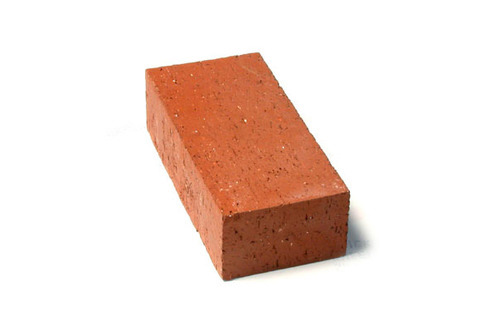
Up to the one million mark, these numbers total 5.28% of the range. One of the concepts associated with a sphenic number is that of the sphenic brick. Let's consider a sphenic number \(n\) whose factors are \(a,b,c\). The sphenic brick is the three dimensional cuboid with volume of \(n\) cubic units and linear dimensions of \(a,b\) and \(c\) units.
Such a brick has an associated surface area and a thought occurred to me. Are there any reversible sphenic number pairs that each have the same surface area? A little investigation revealed that there are. They are rare birds indeed however, and there are only eight ( in four pairs) in the range up to three million (366 and 663, 3245 and 5423, 3685 and 5863, 921239 and 932129). Here are the details and here is the permalink to the calculation. Surface areas are shown in bold red.
366 = 2 x 3 x 61 --> 622 and 663 = 3 x 13 x 17 --> 622
3245 = 5 x 11 x 59 --> 1998 and 5423 = 11 x 17 x 29 --> 1998
3685 = 5 x 11 x 67 --> 2254 and 5863 = 11 x 13 x 41 --> 2254
921239 = 11 x 89 x 941 --> 190158 and 932129 = 11 x 101 x 839 --> 190158
None of the sphenic bricks associated with these numbers look like bricks because they are all very elongated but that's the term that is used for these shapes. Figure 1 shows that the 11 x 89 x 941 looks more like a plank than a brick.
Figure 1
There may well be more beyond the three million mark but SageMathCell timed out above that. Anyway, fascinating that such numbers exist with the first of them being 366, the number of days in a leap year. It can be noted that 366 is the only even number. Placed in sequence on the number line we have:
366, 663, 3245, 3685, 5423, 5863, 921239, 932129
This sequence of terms could be described thus:
Non-palindromic sphenic numbers which, when reversed, are also sphenic numbers with the members of both pairs having identical sphenic brick surface areas.
Not surprisingly this sequence does not appear in the OEIS, nor will it, as I have ceased to contribute.
ADDENDUM:
The above idea can be applied to semiprimes as well. In this case we will be working with two dimensional rectangles. The two factors of the semiprime form the length and width of the associated rectangle. In the range up to one million, reversible semiprimes comprise 6.06% of the total range but there are only 26 reversible semiprimes with the property that their associated areas are equal. See permalink for calculation.
The pairs (up to one million) are:
14269 = 19 x 751 --> 1540 and 96241 = 157 x 613 --> 1540
15167 = 29 x 523 --> 1104 and 76151 = 271 x 281 --> 1104
16237 = 13 x 1249 --> 2524 and 73261 = 61 x 1201 --> 2524
18449 = 19 x 971 --> 1980 and 94481 = 107 x 883 --> 1980
18977 = 7 x 2711 --> 5436 and 77981 = 29 x 2689 --> 5436
36679 = 43 x 853 --> 1792 and 97663 = 127 x 769 --> 1792
140941 = 97 x 1453 --> 3100 and 149041 = 103 x 1447 --> 3100
150251 = 347 x* 433 --> 1560 and 152051 = 383 x 397 --> 1560
196891 = 401 x 491 --> 1784 and 198691 = 431 x 461 --> 1784
302363 = 211 x 1433 --> 3288 and 363203 = 263 x 1381 --> 3288
308459 = 173 x 1783 --> 3912 and 954803 = 937 x 1019 --> 3912
319853 = 317 x 1009 --> 2652 and 358913 = 379 x 947 --> 2652
958099 = 761 x 1259 --> 4040 and 990859 = 839 x 1181 --> 4040
It can be noted that all these reversible semiprimes are odd.
If we are even more adventurous we can consider numbers with four distinct factors as being associated with 4-dimensional hypercuboids. When unfolded into 3-dimensions, the eight cuboids are the equivalent of the surface area of our sphenic bricks. In the range up to three million, about 1.48% of numbers are reversible four factor numbers with the first one being 1518 = 2 x 3 x 11 x 23 and 8151 = 3 x 11 x 13 x 19. However, no number pairs emerge with identical volumes of unfolded cuboids. Figure 1 shows an unfolded hypercube and an unfolded hypercuboid will look similar but will have four pairs of cuboids each with different volumes, instead of consisting of eight identical cubes. Permalink (which may need double checking).
I've long championed the association between the surface area of a sphenic brick and its volume. Consider a sphenic number such as 170 that factors to 2 * 5 * 17. It can be considered to represent a rectangular prism with volume 170 cubic units and dimensions of 2, 5 and 7 units. The surface area of such a prism is 258 square units. In previous posts, I've examined the ratio of surface area to volume but today a thought struck me. What if the surface area itself in a sphenic number? This would mean that the surface area could be linked to another rectangular prism.
This is indeed the case for 170 because its surface area of 258 = 2 * 3 * 43 and can thus be linked to a prism with volume of 258 cubic units and dimensions of 2, 3 and 43 units. This prism has a surface area of 442 square units. The obvious question is: can this process be continued? Well 442 = 2 * 13 * 17 and so the answer is yes. The resulting prism has a surface area of 562 square units but 562 = 2 * 281 and so this is where things stopped.
I then got to thinking about the maximum number of iterations possible up to a certain limit. To investigate this, I needed to develop a robust algorithm and I spent most of the day tinkering with one. In the end, using SageMathCell, I succeeded. Here's a permalink to the coding window and below are the runs of eight iterations up to 40,000:
So starting with 7386, there is then a run of eight sphenic numbers generated by the volume-area iteration. The run ends at 25642 which is not a sphenic number. Similarly for the other chains shown and it should be noted that several chains merge into others. For example, 7386, 9514 and 9562, all end with 25642. So, how many iterations are possible? Well, up to \( \textbf{ten million}\), there are three chains of 15 iterations, all ending in \( \textbf{10186102} \) (permalink):
Today I turned 25285 days old and, as I discovered in Numbers Aplenty, 25285 is a sphenic number. The definition given on that site is:
A number \(n\) is called sphenic if it is the product of 3 distinct primes.
For example, 370 is a sphenic number because it is the product of the 3 primes 2, 5 and 37.
Sphenic numbers are quite common: up to \(10^8\) there are 20,710,806 sphenic numbers.
The sum of the reciprocals of the sphenic numbers diverges, while the sum of the reciprocal of their squares converges to 0.003696244... , which can be expressed as \((P(2)^3-3\,P(2)\,P(4)+2\,P(6))/6\), where $$P(s)=\sum_{p\mathrm{\ prime}}\frac{1}{p^s}$$is the so-called prime Zeta function
The sum of the reciprocals of the squares of the sphenic numbers does indeed approach 0.003696244 as can be seen by taking the numbers from 30 to 310 and applying the following SAGE code:
The following is a modification of the Wikipedia entry for sphenic numbers:
In number theory, a sphenic number is a natural number|positive integer that is the product of three distinct prime numbers. Thus a sphenic number is a product ''pqr'' where ''p'', ''q'', and ''r'' are three distinct prime numbers. This definition is more stringent than simply requiring the integer to have exactly three prime factors. For instance, \(60 = 2^2 × 3 × 5 \) has exactly 3 prime factors, but is not sphenic.
The smallest sphenic number is 30 = 2 × 3 × 5, the product of the smallest three primes. The largest known sphenic number is $$(2^{77232917}− 1) \cdot (2^{74,207,281} − 1) \cdot (2^{57,885,161} − 1)$$It is the product of the three largest known primes.
All sphenic numbers have exactly eight divisors. If we express the sphenic number as \(n = p \cdot q \cdot r \), where ''p'', ''q'', and ''r'' are distinct primes, then the set of divisors of ''n'' will be { 1, p, q, r, pq, pr, qr, n }.
The converse does not hold. For example, 24 is not a sphenic number, but it has exactly eight divisors.
All sphenic numbers are by definition squarefree, because the prime factors must be distinct.
The Möbius function of any sphenic number is -1.
The first case of two consecutive sphenic integers is 230 = 2×5×23 and 231 = 3×7×11. The first case of three is 1309 = 7×11×17, 1310 = 2×5×131, and 1311 = 3×19×23. There is no case of more than three, because every fourth consecutive positive integer is divisible by 4 = 2×2 and therefore not square-free.
The numbers 2013 (3×11×61), 2014 (2×19×53), and 2015 (5×13×31) are all sphenic. The next three consecutive sphenic years will be 2665 (5×13×41), 2666 (2×31×43) and 2667 (3×7×127) (see OEIS A165936).
The OEIS sequence A007304 (sphenic numbers, products of 3 distinct primes) mentions that a sphenicbrick is a rectangular parallelopiped whose sides are components of a sphenic number, namely whose sides are three distinct primes. For example, the distinct prime triple (3,5,7) produces a 3 x 5 x 7 unit brick which has volume 105 cubic units.
From my early days of investigating numbers, I had considered triprimes (number that factor into three, not necessarily distinct, primes) as having unique representations as rectangular prisms. I was interested in the relationship between a prisms volume and its surface area, coining the term "cubicity". Here is a snapshot of a February 2014 Instagram post: