Showing posts with label convergent. Show all posts

Monday, 8 May 2023

Brazilian Primes

There's only one reference that I've made to Brazilian primes in this blog and that was in a post titled Fermat Primes and Brazilian Numbers on February 26th 2018 which is now over five years ago. I was reminded of them once again when a number associated with my diurnal age, 27061, was identified as a Brazilian prime. I wrote the following about Brazilian numbers in that earlier post:

These numbers are listed in OEIS A125134 and defined as:

Numbers \( n \) such that there is a natural number \( b \) with \( 1 < b < n-1 \) such that the representation of \( n \) in base \( b \) has all equal digits.

All even numbers \( \geq \) 8 are Brazilian numbers because: $$ \begin{align} 2p&=2(p-1)+2 \\&= 22 \end{align}$$in base \(p-1\) if \(p-1>2 \) and that is true if \(p \geq 4 \). 

The odd Brazilian numbers are listed in OEIS A257521 and are fairly common, with some being prime numbers:

7, 13, 15, 21, 27, 31, 33, 35, 39, 43, 45, 51, 55, 57, 63, 65, 69, 73, 75, 77, 81, 85, 87, 91, 93, 95, 99, 105, 111, 115, 117, 119, 121, 123, 125, 127, 129, 133, 135, 141, 143, 145, 147, 153, 155, 157, 159, 161, 165, 171, 175, 177, 183, 185, 187, 189, 195, ...

As an example, take 27 in the above sequence which can be expressed as \(33_8 \). As for the even numbers, take a number like 28. It can be written as 2 x (14-1) + 2 and thus can be represented as \(22_{13} \).

Brazilian primes are simply Brazilian numbers that are prime. These constitute OEIS A085104:


 A085104

Primes of the form \(1 + n + n^2 + n^3 + ... + n^k \) where \(n > 1\) and \( k > 1\).


For example, in the case of 27061 we have: $$ \begin{align} 27061& = 1+164+164^2 \\ &= 164^2+164+1\\&=111_{164} \end{align}$$These primes can be generated using this permalink. The initial members of the sequence are:

7, 13, 31, 31, 43, 73, 127, 157, 211, 241, 307, 421, 463, 601, 757, 1093, 1123, 1483, 1723, 2551, 2801, 2971, 3307, 3541, 3907, 4423, 4831, 5113, 5701, 6007, 6163, 6481, 8011, 8191, 8191, 9901, 10303, 11131, 12211, 12433, 13807, 14281, 17293, 19183, 19531, 20023, 20593, 21757, 22621, 22651, 23563, 24181, 26083, 26407, 27061, 28057, 28393, 30103, 30941, 31153, 35533, 35911, 37057, 37831, 41413, 42643, 43891, 46441, 47743, 53593, 55933, 55987, 60271, 60763, 71023, 74257, 77563, 78121, 82657, 83233, 84391, 86143, 88741, 95791, 98911

The OEIS comments to this sequence are informative:

The number of terms \(k+1\) is always an odd prime, but this is not enough to guarantee a prime, for example 111 = 1 + 10 + 100 = 3 x 37.

The inverses of the Brazilian primes form a convergent series; the sum is slightly larger than 0.33.

It is not known whether there are infinitely many Brazilian primes. 

Brazilian primes can be written in the form:

$$ \dfrac{(n^p - 1)}{(n - 1}\\ \text{ where } p \text{ is an odd prime and } n > 1$$

The number of terms less than \(10^n\) are 1, 5, 14, 34, 83, 205, 542, 1445, 3880, 10831, 30699, 88285, ...

Brazilian primes fall into two classes:

  • when \(n\) is prime, we get sequence OEIS A023195 except 3 which is not Brazilian,
  • when \(n\) is composite, we get sequence OEIS A285017.

The conjecture that "No Sophie Germain prime is Brazilian (prime)"  is false because:$$ \begin{align} a(856) &= 28792661\\ &= 1 + 73 + 73^2 + 73^3 + 73^4 \\&= (11111)_{73} \end{align} $$and 28792661 is the 141385-th Sophie Germain prime. 

Tuesday, 1 January 2019

Sphenic Numbers Revisited

After this post, I discovered that I'd already made an earlier post about sphenic numbers. No matter but it alerted me to the fact that I've made so many posts to this mathematics blog that I'm losing track of what I've posted.

Today I turned 25474 days old. This number factors to 2 * 47 * 271. Yesterday's number, 25473, factors to 3 * 7 * 1213. Both are sphenic numbers, described by Numbers Aplenty as follows:
A number \(n\) is called sphenic if it is the product of 3 distinct primes. For example, 370 is a sphenic number because it is the product of the 3 primes 2, 5 and 37. Sphenic numbers are quite common: up to \(10^8\) there are 20710806 sphenic numbers (that's about 20%). 
The sum of the reciprocals of the sphenic numbers diverges, while the sum of the reciprocal of their squares converges to \(0.003696244...\), which can be expressed as: $$ \frac{(P(2)^3-3 \, P(2) \, P(4)+2 \,P(6))}{6}\\ \text { where }P(s)=\sum_{p\mathrm{\ prime}}\frac{1}{p^s}$$ is the so-called prime Zeta function. 
The first sphenic numbers are 30, 42, 66, 70, 78, 102, 105, 110, 114, 130, 138, 154, 165, 170, 174, 182, 186, 190, 195, 222, 230, 231, 238, 246, 255, 258, 266, 273, 282, 285, 286, 290, 310
Wikipedia adds that:
All sphenic numbers have exactly eight divisors. If we express the sphenic number as \( n = p \cdot q \cdot r\) where \(p\), \(q\), and \(r\) are distinct primes, then the set of divisors of \(n\) will be \({1, p, q, r, pq, pr, qr, n}\). The converse does not hold. For example, 24 is not a sphenic number, but it has exactly eight divisors. 
All sphenic numbers are by definition squarefree, because the prime factors must be distinct. 
The first case of two consecutive sphenic integers is 230 = 2×5×23 and 231 = 3×7×11. The first case of three is 1309 = 7×11×17, 1310 = 2×5×131, and 1311 = 3×19×23. There is no case of more than three, because every fourth consecutive positive integer is divisible by 4 = 2×2 and therefore not squarefree. 
The numbers 2013 (3×11×61), 2014 (2×19×53), and 2015 (5×13×31) are all sphenic. It's interesting that these very recent calendar years formed a sphenic triplet, although I didn't know it at the time I was living through them. The next three consecutive sphenic years will be 2665 (5×13×41), 2666 (2×31×43) and 2667 (3×7×127) (see OEIS A248202 for a list of the central number of such triples). 
Sphenic Brick
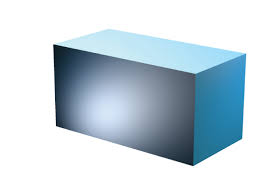
In terms of geometry, each sphenic number can be considered to represent the volume of a unique and "primitive" rectangular prism (sometimes called a sphenic brick) whose dimensions are given by its three prime factors. I'm using primitive here in the same sense as "primitive Pythagorean triad" such as 3, 4 and 5 (as opposed to 6, 8 and 10). By its definition however, a sphenic number can never represent the volume of a cube or a rectangular prism with a square cross-section.

Each sphenic number \( n = p \cdot q \cdot r\) can be associated with another number, namely the surface area of the rectangular prism  \( 2 \, (p \cdot q + p \cdot r+q \cdot r) \). For example, the sphenic number  \( 7429 = 17 \cdot 19 \cdot 23\) can be viewed as a rectangular prism with an associated surface area of \(2302\) square units. The ratio between area and volume can then be explored. The table below shows the values of such ratios for sphenic numbers between 25400 and 25500:


It is possible for the volume and surface area to be equal. In a range of numbers between 1 and 1000, the only such dimensions that produce this are:
  • 3 x 7 x 42   --> 882 
  • 3 x 8 x 24   --> 576
  • 3 x 9 x 18   --> 486
  • 3 x 10 x 15 --> 450
  • 4 x 5 x 20   --> 400
  • 4 x 6 x 12   --> 288
Whether these are the only values with this property I don't know but none of the above numbers (288, 400, 450, 486, 576 and 882) are sphenic so it's likely that there are no sphenic numbers with this property.

To determine the sphenic numbers within a given range, this SageMath code (link to SageMathCell server) can be used or the box below (sometimes temperamental) can be experimented with:


Monday, 25 June 2018

Sphenic Numbers

Today I turned 25285 days old and, as I discovered in Numbers Aplenty, 25285 is a sphenic number. The definition given on that site is:
A number \(n\)  is called sphenic if it is the product of 3 distinct primes. 
For example, 370 is a sphenic number because it is the product of the 3 primes 2, 5 and 37. 
Sphenic numbers are quite common: up to  \(10^8\) there are 20,710,806 sphenic numbers. 
The sum of the reciprocals of the sphenic numbers diverges, while the sum of the reciprocal of their squares converges to 0.003696244... , which can be expressed as  \((P(2)^3-3\,P(2)\,P(4)+2\,P(6))/6\), where $$P(s)=\sum_{p\mathrm{\ prime}}\frac{1}{p^s}$$is the so-called prime Zeta function 
The first sphenic numbers are 30, 42, 66, 70, 78, 102, 105, 110, 114, 130, 138, 154, 165, 170, 174, 182, 186, 190, 195, 222, 230, 231, 238, 246, 255, 258, 266, 273, 282, 285, 286, 290, 310
The sum of the reciprocals of the squares of the sphenic numbers does indeed approach 0.003696244 as can be seen by taking the numbers from 30 to 310 and applying the following SAGE code:
INPUT: 
sphenic=[30, 42, 66, 70, 78, 102, 105, 110, 114, 130, 138, 154, 165, 170, 174, 182, 186, 190, 195, 222, 230, 231, 238, 246, 255, 258, 266, 273, 282, 285, 286, 290, 310]
sum=0
for n in sphenic:
    sum+=1/n^2
print(sum.n())
OUTPUT: 
0.00320320889263633 

The following is a modification of the Wikipedia entry for sphenic numbers:
In number theory, a sphenic number is a natural number|positive integer that is the product of three distinct prime numbers. Thus a sphenic number is a product ''pqr'' where ''p'', ''q'', and ''r'' are three distinct prime numbers. This definition is more stringent than simply requiring the integer to have exactly three prime factors. For instance, \(60 = 2^2 × 3 × 5 \) has exactly 3 prime factors, but is not sphenic. 
The smallest sphenic number is 30 = 2 × 3 × 5, the product of the smallest three primes. The largest known sphenic number is
$$(2^{77232917}− 1) \cdot (2^{74,207,281} − 1) \cdot (2^{57,885,161} − 1)$$It is the product of the three largest known primes. 
All sphenic numbers have exactly eight divisors.  If we express the sphenic number as \(n = p \cdot q \cdot r \), where ''p'', ''q'', and ''r'' are distinct primes, then the set of divisors of ''n'' will be { 1, p, q, r, pq, pr, qr, n }. 
The converse does not hold. For example, 24 is not a sphenic number, but it has exactly eight divisors. 
All sphenic numbers are by definition squarefree, because the prime factors must be distinct. 
The Möbius function of any sphenic number is -1. 
The first case of two consecutive sphenic integers is 230 = 2×5×23 and 231 = 3×7×11. The first case of three is 1309 = 7×11×17, 1310 = 2×5×131, and 1311 = 3×19×23. There is no case of more than three, because every fourth consecutive positive integer is divisible by 4 = 2×2 and therefore not square-free. 
The numbers 2013 (3×11×61), 2014 (2×19×53), and 2015 (5×13×31) are all sphenic. The next three consecutive sphenic years will be 2665 (5×13×41), 2666 (2×31×43) and 2667 (3×7×127) (see OEIS A165936).
The OEIS sequence A007304 (sphenic numbers, products of 3 distinct primes) mentions that a sphenic brick is a rectangular parallelopiped whose sides are components of a sphenic number, namely whose sides are three distinct primes. For example, the distinct prime triple (3,5,7) produces a 3 x 5 x 7 unit brick which has volume 105 cubic units. 


From my early days of investigating numbers, I had considered triprimes (number that factor into three, not necessarily distinct, primes) as having unique representations as rectangular prisms. I was interested in the relationship between a prisms volume and its surface area, coining the term "cubicity". Here is a snapshot of a February 2014 Instagram post: