I examined the Möbius and Mertens functions in a post titled The Möbius Function and Mertens Function on January 25th 2020. In number theory, we define the Mertens function as:$$M(n) = \sum_{1\le k \le n} \mu(k)$$where \( \mu (k)\) is the Möbius function. For any positive integer n, \(μ(n)\) has values in {−1, 0, 1} depending on the factorisation of \(n\) into prime factors:$$\mu(n) = \begin{cases} 1 & \quad \text{if } n \text{ is square-free + integer with even number of prime factors}\\ -1 & \quad \text{if } n \text{ is square-free + integer with odd number of prime factors}\\ 0 & \quad \text{if } n \text{ has a squared prime factor} \end{cases}$$
 |
| Figure 1 |
A028442 | Numbers \(k\) such that Mertens's function M(\(k\)) (A002321) is zero. |
2, 39, 40, 58, 65, 93, 101, 145, 149, 150, 159, 160, 163, 164, 166, 214, 231, 232, 235, 236, 238, 254, 329, 331, 332, 333, 353, 355, 356, 358, 362, 363, 364, 366, 393, 401, 403, 404, 405, 407, 408, 413, 414, 419, 420, 422, 423, 424, 425, 427
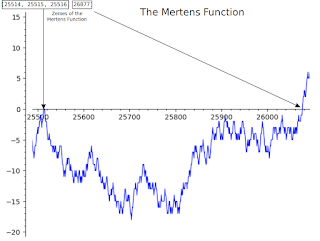
Figure 2 shows a further range from 26000 to 26750 where there a lot more zeroes:
 |
| Figure 2 |
26077, 26134, 26142, 26146, 26153, 26154, 26162, 26163, 26164, 26177, 26179, 26180, 26181, 26183, 26184, 26263, 26264, 26266, 26269, 26273, 26277, 26279, 26280, 26282, 26285, 26321, 26346, 26349, 26350, 26427, 26428, 26430, 26434, 26443, 26444, 26446, 26449, 26450, 26451, 26452, 26454, 26710
The zero upcoming for me is 26710 which is not that far off (Friday, May 20th 2022). After that there is not another zero until Tuesday, April 30th 2024 which is more than two years away. This distant zero will occur as the first in a closely spaced series: 27421, 27429, 27431 and 27432. After that, there is a large gap. See Figure 3.
 |
| Figure 3 |
The full list of zeroes from 27421 to 40000 is as follows:
27421, 27429, 27431, 27432, 27922, 27939, 27940, 27973, 27977, 28009, 28011, 28012, 28014, 28018, 28021, 28031, 28032, 28033, 28127, 28128, 28155, 28156, 28183, 28184, 28189, 28191, 28192, 28193, 28202, 28221, 28254, 28259, 28260, 28262, 28283, 28284, 28290, 28551, 28552, 28554, 28558, 28562, 28565, 28566, 28567, 28568, 29469, 30253, 30262, 30269, 30271, 30272, 33162, 33195, 33196, 33202, 33207, 33208, 33211, 33212, 33342, 33346, 33370, 33373, 33377, 33379, 33380, 33381, 33383, 33384, 33386, 33389, 33390, 33393, 33395, 33396, 33398, 33399, 33400, 33429, 33431, 33432, 33434, 33435, 33436, 33438, 33527, 33528, 33530, 33533, 33534, 35958, 35961, 35963, 35964, 35967, 35968, 35974, 35975, 35976, 35978, 35981, 35982, 36149, 36150, 36154, 36363, 36364, 36415, 36416, 36422, 36423, 36424, 36425, 36561, 36690, 39014, 39015, 39016, 39023, 39024, 39025, 39047, 39048, 39057, 39059, 39060, 39062, 39067, 39068, 39069, 39071, 39072, 39074, 39075, 39076, 39079, 39080, 39082, 39083, 39084, 39093, 39797, 39798, 39801, 39803, 39804, 39811, 39812, 39817I find the Mertens function oddly fascinating and its graph certainly resembles the graph of cumulative random coin tosses where a tail counts as -1 and a head as +1. In the graph of the Mertens function however, the graph can run along the \(x\) axis for a bit because any number with repeated prime factors counts as 0.
For example, consider the run of zeroes 26449, 26450, 26451, 26452 where we have:
- \(26449 = 26449\) which has \( \mu \) = -1 which brings the graph to the \(x\) axis
- \(26450 = 2 \times 5^2 \times 23^2\) which has \( \mu \) = 0 so graph stays on \(x\) axis
- \(26451 = 3^2 \times 2939\) which has \( \mu \) = 0 so graph stays on \(x\) axis
- \(26452 = 2^2 \times 17 \times 389\) which has \( \mu \) = 0 so graph stays on \(x\) axis
- 2 is a term because M(2) = 0 for a run of one zero
- 39 is a term because M(39) = M(40) = 0 for a run of two zeroes
- 331 is a term because M(331) = M(332) = M(333) = 0 for a run of three zeroes
- 422 is a term because M(422) = ... = M(425) = 0 for a run of four of four zeroes
- 45371 is a term because M(45371) = ... = M(45376) = 0 for a run of six zeroes
 |
| Figure 4: permalink |

